
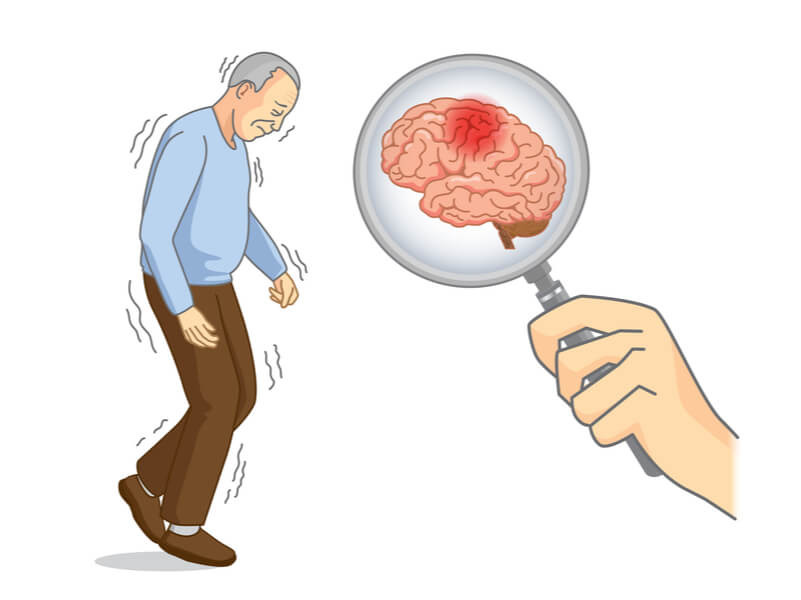
Parkinson's disease is a slowly progressive disease, and current medical treatments are aimed at alleviating symptoms
Meanwhile, clinical trials of regenerative medicine using iPS cells are progressing, and new treatments are beginning to appear
Some people may be interested in the details of regenerative medicine, which is an effective treatment for Parkinson's disease, as well as its causes
By reading this article, you will gain a deeper understanding of the symptoms of Parkinson's disease and iPS cells, which are the key to regenerative medicine
If you are interested in learning more about Parkinson's disease or are struggling to control your symptoms with medication, please refer to this article
table of contents
1. Is Parkinson's disease treatable?
Parkinson's disease is designated as an intractable disease, and the government has established a system for research aimed at clarifying its causes and establishing treatments
As the symptoms are complex and have a significant impact on daily life, it is important to assess the symptoms through classification
1-1. Decline in motor function due to Parkinson's disease
Parkinson's disease has four major symptoms:
- Resting tremor (a regular shaking that occurs when the person is at rest)
- Muscle rigidity (jerkiness and resistance when bending a joint)
- Immobility, hypokinesia (slow body movements and little change in facial expression)
- Postural reflex disorders (short shuffling gait, forward-leaning posture, tendency to fall) and tremors
Symptoms that appear early on include tremors, muscle rigidity, and akinesia, and the disease progresses slowly. Although this varies from person to person, patients are generally able to lead independent lives for about 10 years after the onset of the disease
However, after that, they tend to require more assistance
1-2. Classification of "severity" according to the intractable disease medical expense subsidy system
Parkinson's disease is the most common neurological disease, and depending on the severity of the symptoms, you may be eligible for medical expense subsidies for intractable diseases
The Intractable Disease Medical Expense Subsidy System is a system that supports the burden of medical expenses until an effective treatment for the disease is established
The purpose is to advance research by understanding patients' conditions and treatment details
Those with Parkinson's disease who are in stage 3 or higher of the severity classification are eligible for the Intractable Disease Medical Expense Subsidy System
Parkinson's disease severity classification
| Stage 1 | The disability is limited to one side of the body, with minimal impact on daily life |
| Stage 2 | Disabilities affect both sides of the body, no assistance required for daily life |
| Stage 3 | Obvious gait disturbances and impaired activities of daily living |
| Stage 4 | Decreased ability to stand up, walk, and perform other daily activities, requiring significant assistance |
| Stage 5 | Wheelchair mobility with assistance or bedridden, requiring total assistance |
1-3. Classification of "level of functional impairment in daily life" under the intractable disease medical expense subsidy system
Patients with a level 2 or higher functional disability in daily living as listed below are eligible for the Intractable Disease Medical Expense Subsidy System for Parkinson's disease and other intractable diseases
Degree of functional impairment
| 1 degree | Requires almost no assistance with daily activities or medical visits |
| 2 degrees | Requires partial assistance with daily activities and medical visits |
| 3 degrees | Requires full assistance in daily life and is unable to walk or stand |
This support system is valid for one year, and the amount of self-payment is determined based on the household income. If you wish to continue receiving medical expenses subsidies, you will need to apply for renewal
2. Regenerative medicine using iPS cells is attracting attention as a treatment for Parkinson's disease
In 2018, the Center for iPS Cell Research and Application at Kyoto University began the world's first clinical trial using iPS cells (induced pluripotent stem cells) to improve the symptoms of Parkinson's disease
We will introduce you to the latest regenerative medicine, which is attracting a lot of attention and allows you to live independently while managing your symptoms
2-1. iPS cells (induced pluripotent stem cells) are considered effective in treating Parkinson's disease
iPS cells are cells that have the ability to grow into new tissues and organs by introducing a small number of factors into human skin, blood, or other cells and culturing them
Dopamine neurons are created from iPS cells and transplanted into the brain, increasing the amount of dopamine in the brain and improving symptoms
"Allogeneic transplantation," which involves transplanting cells from another person, allows many cells to be prepared at once, reducing costs and effort
On the other hand, the following risks may be considered:
- In allogeneic transplants, the transplanted material may be perceived as a foreign body, causing an immune reaction
- There is a concern that the original cells may be damaged during transplantation, or that undifferentiated cells may remain, causing the iPS cells to become tumorigenic
Through meticulous research, we have steadily made progress in addressing these issues and have succeeded in improving safety
2-2. Results confirmed with iPS cells as regenerative medicine
The research group confirmed the following safety and efficacy using human iPS cells:
- Dopamine neurons created from iPS cells functioned normally in the brains of Parkinson's model animals, improving their behavior
- The induced dopaminergic neurons can be highly enriched, and cells that may proliferate after transplantation are removed during the enrichment process
- No tumor formation was observed when transplanted into mice with no abnormalities in cancer-related genes and weakened immune systems
The clinical trial will involve seven patients, with their progress monitored for two years. By accumulating cases demonstrating the safety and effectiveness of cell transplantation, the goal is to reduce the number of patients who become bedridden due to Parkinson's disease to zero
3. Causes of Parkinson's disease
Parkinson's disease is a disorder that causes motor dysfunction due to the loss of dopamine neurons in the substantia nigra of the brain
Although some genetic mutations are involved, the cause of dopamine neuron degeneration and loss is unknown
The striatum, where dopamine is delivered, is most involved in regulating movement, and produces symptoms characteristic of Parkinson's disease, such as tremors, rigidity, and akinesia
Parkinson's disease is closely related to aging, and many studies have shown that an average of 10% of dopamine neurons degenerate and are lost over a 10-year period
As Japan enters a super-aging society, the number of Parkinson's disease patients is expected to increase explosively in the future
4. Common treatments for Parkinson's disease
There is no established cure for Parkinson's disease, and treatment is primarily symptomatic, addressing the symptoms
Current treatments mainly involve dopaminergic drugs, and because symptoms are diverse, it is essential to use a combination of drugs
One area that has attracted attention is regenerative medicine using iPS cells, and recent research has shown that it is also effective in treating Parkinson's disease
The future may not be far off when this method will be widely adopted as an effective treatment for Parkinson's disease, which is designated as an intractable disease
5. Summary: Regenerative medicine is attracting attention as a treatment for Parkinson's disease, so expectations are high for the future
There is currently no established cure for Parkinson's disease
The only common treatment is drug therapy, which mainly slows the progression of the disease
However, drugs can have side effects such as nausea, constipation, and hallucinations
In this context, regenerative medicine is attracting attention
If iPS cells can reduce motor dysfunction, there will be no need to worry about the side effects of drugs
Just by eliminating the need for detailed medication adjustments, the burden on daily life will be greatly reduced
For patients with the characteristic movement disorders caused by Parkinson's disease to maintain their daily lives, the understanding and support of their families is essential
We hope that regenerative medicine treatments will become more widely used in the future as one option for continuing to provide support both physically and mentally
Supervision: Dr. Yasushi Tsuda