
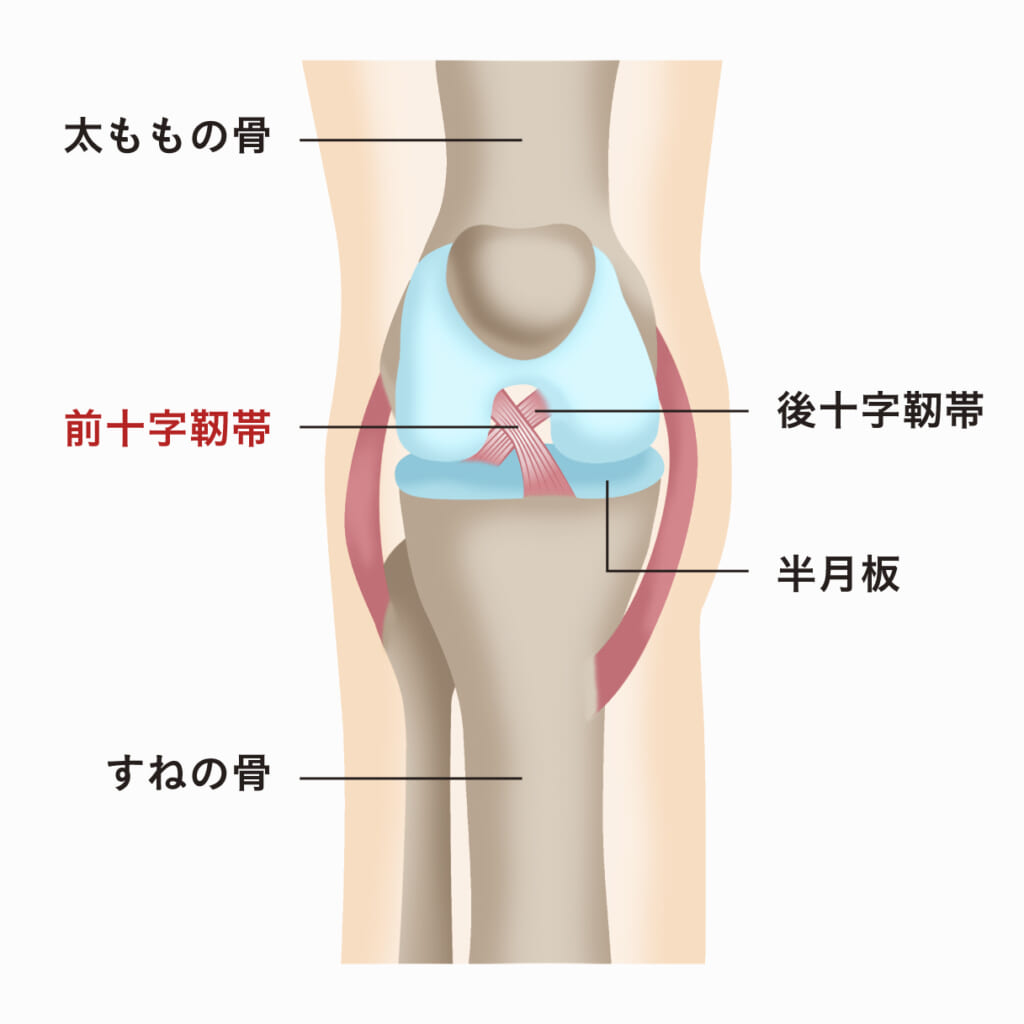
The Posterior Cruciate Ligament (PCL) is an important ligament located in the center of the knee that connects the femur and tibia. The PCL plays a role in keeping the knee stable and preventing excessive backward movement. When the PCL ruptures, the stability of the knee is lost, which greatly interferes with daily life and sports activities. This article provides a detailed explanation of the symptoms and treatment of posterior cruciate ligament rupture.
table of contents
Symptoms of posterior cruciate ligament rupture
acute symptoms
- Knee pain: The most common symptom of a PCL rupture is deep-seated pain in the knee. The pain can be particularly severe immediately after the injury.
- Swelling: Your knee may swell after an injury. The swelling usually peaks within 24 hours.
- Instability: I sometimes feel like my knees are unstable. This is especially noticeable when going down stairs or performing movements that put stress on my knees.
chronic symptoms
- Persistent pain: The pain may persist over time. It may be especially worse after exercise or prolonged walking.
- Limited range of motion: The range of motion in the knee may be limited. It may become difficult to fully extend or bend the knee.
- Muscle weakness: The muscles around the knee may weaken, which can lead to further knee instability.
Causes of posterior cruciate ligament rupture
The main cause of PCL tears is a strong external force applied to the knee. Specifically, the following situations are possible:
- Traffic accident: A strong blow to the knee against the dashboard can cause a rupture of the PCL (pain-carpal tunnel syndrome).
- Sports injuries: In sports such as soccer, rugby, and skiing, direct impact to the knee can cause tears.
- Falls: PCL rupture can also occur if you fall with your knee bent.
Diagnosis of posterior cruciate ligament rupture
- Medical history and visual examination: First, the doctor will ask the patient detailed questions about their symptoms and the circumstances of their injury. Next, they will visually examine the knee for swelling or deformation.
- Manual examination: Manual examinations such as the posterior drawer test and Lachman test are performed to assess knee stability.
- Imaging tests: X-rays and MRI are used to confirm PCL tears. MRI is particularly effective for examining ligament damage in detail.
Treatment for posterior cruciate ligament rupture
Conservative therapy
- Rest and Icing: As initial treatment, rest your knee and apply ice. To reduce swelling and pain, it is recommended to apply ice several times a day for about 20 minutes each time.
- Compression and elevation: Compress the knee with a compression bandage or wrap to reduce swelling. Raising the knee above the heart can also reduce swelling.
- Physical therapy: Rehabilitation is performed to strengthen muscles and improve range of motion. Exercise therapy is performed under the guidance of a physical therapist to restore knee stability.
surgical therapy
Surgery may be considered if conservative treatment does not improve symptoms or if the patient wishes to return to competition.
- PCL reconstruction: The PCL is reconstructed using the patient's own tendon or an artificial ligament. The surgery is usually performed using arthroscopy.
- Postoperative Rehabilitation: After surgery, rehabilitation is carried out in stages. The knee is immobilized for several weeks after surgery, and then the range of motion is gradually increased, followed by exercises to restore muscle strength.
prevention and control
- Proper training: Strengthening the muscles around the knee and maintaining flexibility can reduce the risk of PCL rupture.
- Proper use of orthotic devices: Using knee supports or braces during sports activities helps maintain knee stability and reduces the risk of injury.
- Early treatment: If you experience pain or instability in your knee, it is important to see a doctor as soon as possible. Early treatment can prevent the condition from worsening.
summary
A posterior cruciate ligament tear is an injury that has a significant impact on the stability of the knee. Early diagnosis and appropriate treatment can speed recovery and help return to daily life and sports activities. If you experience pain or instability, we recommend that you seek medical attention immediately. A combination of physical therapy and surgical therapy can help many patients regain an active life.
Supervision: Dr. Yasushi Tsuda