
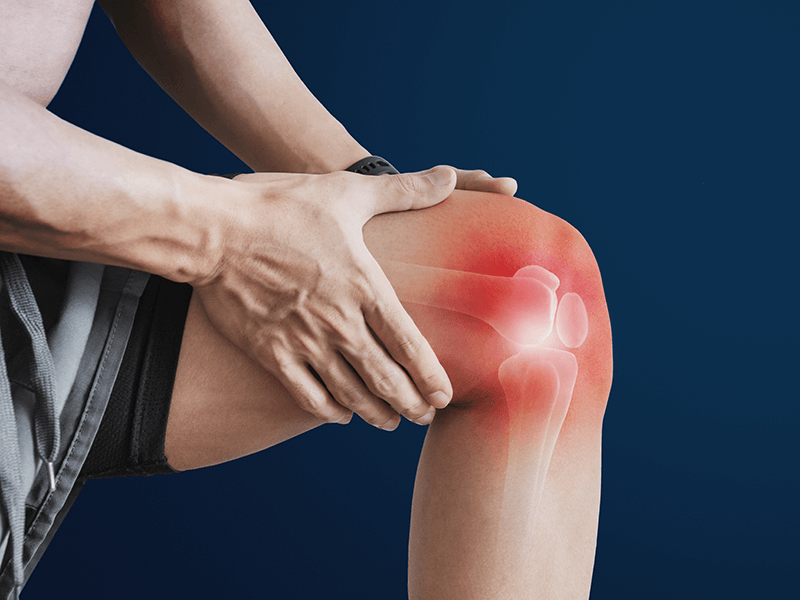
When I bend my knees I hear a popping sound..
In addition to the noise, some people may experience other symptoms such as pain, swelling, or difficulty straightening the knee
In these cases, you may be able to wait and see, or you may need to see a doctor. Here, we will explain the causes of popping sounds when bending your knee, illnesses to be aware of, and how to deal with them
table of contents
Causes of popping knees
There are two causes of knee cracking: those that are not caused by illness and those that are. The ones you should be careful of are those caused by illness
not caused by illness
① Caused by aging and lack of exercise1
The knee is a joint where the bones of the thigh, knee, and calf are connected, and cartilage and synovial fluid act as cushions to prevent these bones from rubbing against each other, allowing for smooth movement
When the knee joint becomes distorted due to aging or lack of exercise, air gets into the joint fluid, and when you bend the knee, the air pops, making a popping sound
For a while after that, there will be no noise because the air does not accumulate quickly, but after some time the popping sound will start again
If there are no other symptoms besides the noise, it is often okay to just wait and see
② Caused by sudden exercise
Contrary to the lack of exercise mentioned above, sudden exercise that puts pressure on the knee can also cause air to enter the joint fluid and burst
This will result in a popping sound. In this case too, if there are no other symptoms, it is best to wait and see
reference)
1 Why do my knees crack when I bend them? 3 causes and how to fix it (teru-saishin.com)
caused by illness
1. Knee osteoarthritis2
Knee osteoarthritis is a condition in which the shape of the knee changes due to a decrease in knee cartilage and synovial fluid caused by aging, obesity, or genetic factors. It can also appear as an aftereffect of a fracture or meniscus injury
Symptoms include a popping sound every time you bend your knee, pain and swelling, difficulty walking, bowed legs, and an inability to straighten your knee
Examination reveals an increase in joint fluid (known as "water accumulation") due to inflammation
The male to female ratio is 1:4, with a female predominance
②Patellar chondromalacia3
Chondromalacia patella refers to a condition in which the cartilage behind the knee bone (known as the "kneecap") becomes deformed or collapses during exercise due to weakening of the thigh muscles and reduced flexibility of the knee joint
Symptoms include severe pain around the knee or behind the knee when standing up, walking, running, going up and down stairs, etc. In terms of gender and age, it tends to be more common among young female runners and those who wear high heels
reference)
2 "Osteoarthritis of the knee" | Japanese Orthopaedic Association Symptoms and Diseases (joa.or.jp)
What to do when your knees pop
When your knee cracks, there are things you can do yourself or get medical help
If the problem is not caused by one of the aforementioned illnesses, you can try to treat it yourself first. If the problem is caused by an illness, do not try to treat it yourself and consult a medical institution
Things you can do yourself4
If you have no other symptoms besides the cracking sound in your knees, muscle training, proper weight management, and warming up your knees can be effective. To reduce the strain on your knees, it is important not to focus your weight on just your knees
Therefore, you should strengthen the muscles in the front of your thighs (quadriceps) and try to lose weight if you are obese. Also, warming your knees can help eliminate fatigue substances that have accumulated due to poor circulation, making it harder to make sounds
Those performed at medical institutions4
1) Medication
It is the treatment of choice for both osteoarthritis of the knee and chondromalacia patella
If you have symptoms other than the cracking sound in your knee but the pain is mild, or there is little swelling or deformation, you may be able to see how it goes with anti-inflammatory or painkiller medications. These come in the form of oral medications, patches, or suppositories
②Hyaluronic acid injection
It is the treatment of choice for osteoarthritis of the knee
There is an injectable medication called hyaluronic acid injection. Since hyaluronic acid is one of the components of joint fluid, it is injected when the joint fluid level is low to create an artificial cushion to prevent bones from rubbing against each other
It is important to note that for both ① and ②, medication will not cure the disease itself, so you will also need to take self-care measures such as muscle training and appropriate weight management under the guidance of your doctor
③Ensuring rest
This is the treatment of choice, especially in cases of chondromalacia patella
Since most patients with chondromalacia patellar syndrome are affected by sports, we recommend that you discontinue sports for the time being, rest your knee, and undergo rehabilitation such as muscle training
4. Surgical treatment
It is the treatment of choice for osteoarthritis of the knee
Surgery is recommended if pain, swelling, or deformation is present and does not subside with medication, or if it is already significantly affecting daily life, such as making it difficult to walk
Typical surgeries include arthroscopic (endoscopic) surgery, high tibial osteotomy, and total knee replacement
In mild to moderate cases, arthroscopic surgery or high tibial osteotomy is often performed, while in severe cases, artificial knee replacement is said to be more appropriate
reference)
summary
This time, we talked about the causes of cracking sounds when bending your knees, diseases to watch out for, and how to deal with it
If the only sound you hear is a popping sound, it is often okay to just wait and see, but you should be concerned about whether pain, swelling, or difficulty straightening the knee gradually develops
If you are already experiencing symptoms other than the noise, be sure to visit a medical institution as consulting a doctor as soon as possible can help determine the severity of the illness
Supervision: Dr. Yasushi Tsuda