
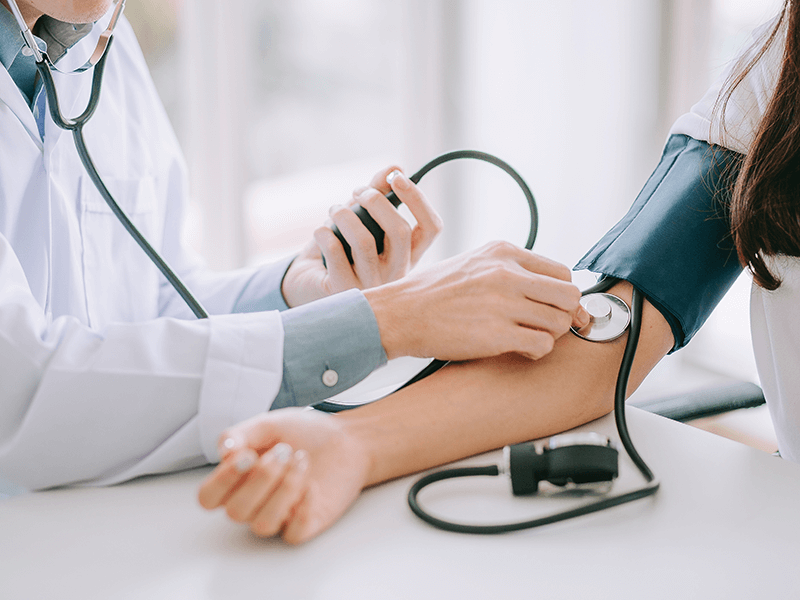
We often hear about high or low blood pressure, but what is the normal blood pressure level?
Is there anything I can do to normalize my blood pressure?
When you visit a hospital, you will often be asked to have your blood pressure measured, but many people don't know what normal blood pressure is or what to do if their blood pressure is higher than normal
In this article, we will explain normal blood pressure levels and what to do if your blood pressure is high
table of contents
Normal Blood Pressure
See the table below for normal blood pressure values
High Blood Pressure | Quoted from eHealthNet (Ministry of Health, Labour and Welfare)
https://www.e-healthnet.mhlw.go.jp/information/metabolic/m-05-003.html
Normal blood pressure is measured at home with a systolic value of less than 115 and a diastolic value of less than 75. Blood pressure measured in a doctor's office is considered to be less than 120 and less than 80. If the value is higher than this, it is classified as high normal or high blood pressure depending on the degree.
The values that are considered high vary slightly between blood pressure measured at a hospital and at home. This is likely because blood pressure can rise due to the travel to the hospital and the stress of entering the hospital
Blood pressure is considered high when it exceeds 140mmHg
What if you're told you have high blood pressure?
If your blood pressure exceeds normal levels and you are diagnosed with high blood pressure, what should you do?
We will explain how to deal with high blood pressure
Limit salt intake
If you have high blood pressure, you're probably told to limit your salt intake
When you take in a lot of salt, the salt concentration in your blood increases. In order to dilute the salt concentration in your blood, your body tries to take in more water. As a result, the amount of blood flowing in your blood vessels increases, causing your blood pressure to rise
When you limit your salt intake, the salt concentration in your blood decreases. This causes your body to excrete more water from your blood in an attempt to increase the salt concentration. When water is excreted through urine, the amount of blood flowing through your blood vessels decreases, which helps lower your blood pressure
The standard salt intake for adult men is set at less than 7.5g, and for adult women, less than 6.5g. If you drink the entire cup of instant ramen, including the soup, you will be consuming around 6g of salt. This means that one cup of instant ramen will provide most of your daily salt intake.
It may be difficult to limit your salt intake, but try to eat with the salt intake guidelines in mind
Exercise
Lack of exercise can also cause high blood pressure
The study looked at changes in blood pressure between groups that exercised and those that did not, and found that blood pressure decreased in the group that exercised
People who lack exercise and physical fitness tend to have higher than normal blood pressure. It is also known that obese people tend to have higher than normal blood pressure
The reason for this could be the following:
- If you continue to not exercise, your physical strength will decrease and you will become obese
- When you are obese, your triglyceride and blood sugar levels also increase, which increases the risk of damage to your blood vessels
- Naturally, this can lead to arteriosclerosis, which can cause blood pressure to become higher than normal
For these reasons, obese people are more likely to have high blood pressure
If you are concerned about not getting enough exercise, I would recommend starting to exercise as much as you can
Quit smoking
The nicotine contained in tobacco constricts blood vessels, creating a state similar to that of a constricted water hose, putting pressure on the blood vessels. If this condition continues, the blood vessels will be damaged and gradually harden, leading to arteriosclerosis
When arteriosclerosis occurs, the flexibility of blood vessels is reduced, making the body more susceptible to high blood pressure
Try to avoid smoking as much as possible
Don't let stress build up
When we are under stress, the sympathetic nervous system becomes excited. The sympathetic nervous system is the autonomic nervous system that wakes up the body and prepares it for battle, so it constricts blood vessels and raises blood pressure. If this state continues for a long time, blood vessels will remain constricted, causing blood pressure to rise above normal levels and leading to arteriosclerosis
When you are released from stress and relaxed, the parasympathetic nervous system is activated. The parasympathetic nervous system has the function of widening blood vessels, which can lower blood pressure
It is important to avoid letting stress build up on a daily basis
Risk of high blood pressure
High blood pressure can prevent blood vessels from maintaining normal function, which can lead to arteriosclerosis
Arteriosclerosis is simply a gradual hardening of the blood vessels, and does not cause any noticeable symptoms
However, as arteriosclerosis progresses, symptoms appear in the organs controlled by those blood vessels. This is difficult to detect from the outside, and most people are unaware of the danger and leave it untreated
As a result, the condition progresses without you even realizing it, narrowing blood passages and causing blood clots to form, leading to sudden serious illness
Diseases caused by arteriosclerosis include
- cerebral hemorrhage
- aortic aneurysm
- angina pectoris
- Myocardial infarction
- Cerebral infarction Subarachnoid hemorrhage
- Transient ischemic attack
- arteriosclerosis obliterans
Atherosclerosis can lead to serious diseases such as the above that can suddenly take your life
summary
In this article, we've explained what normal blood pressure is and what to do if your blood pressure is high
Objectively assess the kind of lifestyle you lead on a daily basis and try to live a life that is less likely to lead to high blood pressure
If your blood pressure is not normal, it can cause various complications, so we recommend that you see a doctor as soon as possible even if you do not have any symptoms
Omotesando Helene Clinic specializes in regenerative medicine that does not place a burden on the body, and provides pre-counseling for those who cannot immediately start treatment.
Fluctuations in blood pressure are related to lifestyle habits such as obesity, excessive drinking, and smoking, but it is generally said to be difficult to improve lifestyle habits
Therefore, by using "regenerative medicine" that utilizes autologous stem cells, it is possible to use one's own cells to repair weakened cells in the body, making it possible to prevent and improve various diseases and complications
"I'm concerned, but I can't decide if prevention is really necessary now." "I haven't decided whether to get treatment, but I'd like to hear more about it first." There's no problem in cases like these. You may be unaware that you're at risk of losing your life, so please feel free to contact us.
・Inquiry form (LINE, WeChat, email): https://stemcells.jp/contact/
[Regenerative Medicine Outpatient] 03-3400-2277
References
Jingu, S. et al. "Study on the antihypertensive effect of habitual exercise in mild hypertension." Heart 15.5 (1983): 513-519.
https://www.jstage.jst.go.jp/article/shinzo1969/15/5/15_513/_pdf
Supervision: Dr. Yasushi Tsuda