
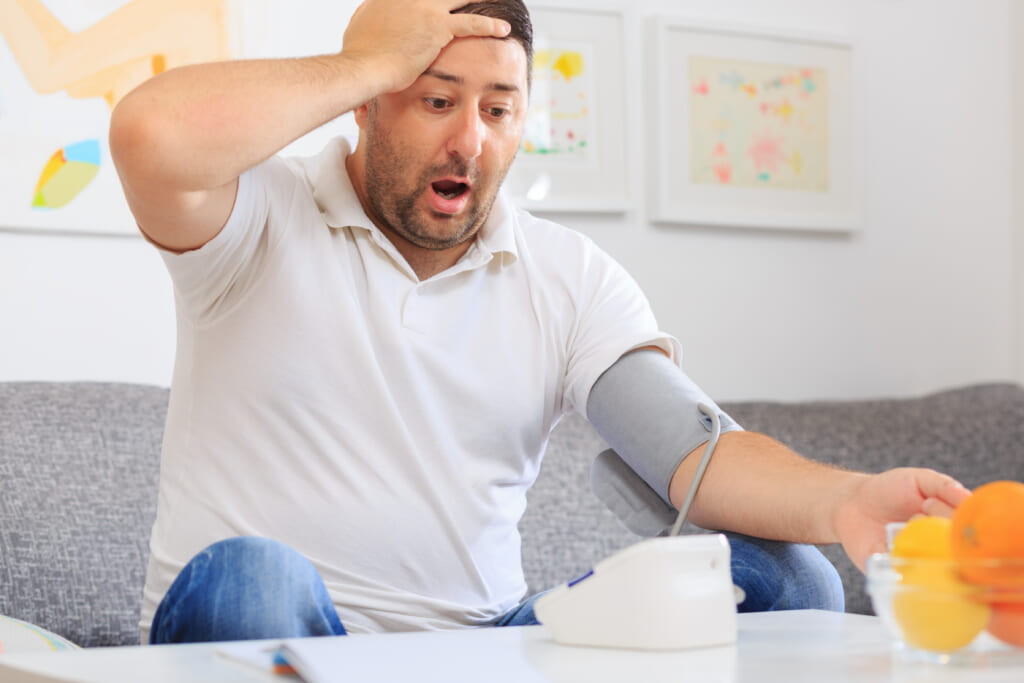
Every time you look at your health checkup results, do you sigh and see that your numbers are getting worse every year?
It's too early to give up and say, "It's just because of age, so there's nothing I can do about it." High blood pressure and high blood sugar are affected by aging, but they may not be the only cause; they may be a sign of your body signaling that you're not getting enough exercise
In this article, we will explain the "metabolic domino" - a chain of frightening diseases that can occur if left untreated - and the importance of muscles in stopping the domino
table of contents
The negative chain reaction "metabolic domino effect" begins with muscle deficiency
There are several types of hypertension, and the causes are not uniform. In the medical community, there is a concept known as the metabolic domino. The metabolic domino was first proposed in 2003 by Professor Ito Yutaka of Keio University and his colleagues. It describes the chain reaction of diseases, like falling dominoes, that worsens and worsens, starting with poor lifestyle habits, followed by obesity, insulin resistance, high blood pressure and hyperglycemia, and then arteriosclerosis and heart failure. Two years later, the diagnostic criteria for the now commonly used term "metabolic syndrome" were established
A major factor in knocking down the first metabolic domino is a decrease in muscle mass. When muscle mass decreases, basal metabolism slows and body temperature tends to drop. The body constricts blood vessels on the surface of the skin to prevent heat from escaping, resulting in increased blood pressure. In other words, maintaining muscle mass acts as a stopper to stop the metabolic domino from falling
Even if you look thin, your muscles may be turning into fat. Beware of hidden obesity!
Those who think, "I'm not overweight, so it doesn't concern me," should be especially careful. The loss of muscle mass that occurs with aging is called sarcopenia, and the combination of sarcopenia and obesity is called "sarcopenic obesity." Even if the number on the scale remains the same, if muscle is being lost and fat is being gained instead, the strain on blood vessels is quietly progressing. After the age of 40, it is important not to be reassured by just the number on the scale
Do you know why gaining fat is not good? Excess fat tissue secretes substances called inflammatory proteins and cytokines that have a negative effect on the body. These not only accelerate muscle atrophy, but also damage blood vessels and cause the rapid progression of arteriosclerosis. In other words, since chronic inflammation continues to occur in the body, eliminating inflammatory substances is an important task in protecting blood vessels
Reference: Japan Society of Sarcopenia and Frailty | Sarcopenia Treatment Guidelines 2017
Reference: J-stage | Sarcopenic Obesity
Break the negative cycle starting today
To break the cycle of negative emotions, you don't have to suddenly start hard exercise. What's important is not to go to the gym, but to reassess your daily activities
Sitting too much accelerates the domino effect
The first thing we need to be conscious of is the amount of time we spend sitting. The World Health Organization (WHO) guidelines clearly state that "sitting too much increases the risk of heart disease, cancer, and type 2 diabetes," and recommend that "reducing the amount of time we spend sitting and engaging in physical activity is good for your health." Physical activity is also beneficial for maintaining mental health and happiness, such as preventing cognitive decline and improving symptoms of depression and anxiety. For modern people who spend long hours at desks, reducing excessive sitting is an urgent priority. It's fair to say that continuing to sit is like pushing down a chain of disease
Reference: WHO Physical Activity and Sedentary Behavior Guidelines (Japanese version)
Action plan: "Stand up once every 30 minutes"
Specific measures are not particularly difficult and are very simple. Simply reduce the amount of time you spend sitting continuously. As recommended in guidelines from the Ministry of Health, Labor and Welfare, try to stand up every 30 minutes to an hour. Even interrupting your sitting with small actions like going to the toilet during work, making tea, or picking up a copy will help restore blood flow to your muscles
"Sedentary" is a new concept, and currently there are no surveys like those on step counts or exercise habits. However, the 2013 National Health and Nutrition Survey reported that 38% of men and 33% of women spend a total of 8 hours or more sitting on weekdays, which is quite long compared to other countries
The difference between exercise and physical activity
Don't worry if you're too busy to go to the gym. In terms of energy consumption, it's said that the majority of energy is consumed through unconscious movements in everyday life (NEAT: Non-Exercise Activity Thermogenesis), rather than through special exercise like sports.
In other words, if you increase your daily activity by walking one stop to work, walking or cycling, or doing housework (shopping, laundry, cleaning) briskly, you can maintain muscle mass without going to the gym, and the domino effect can be stopped. Even making small changes to the way you sit or walk can have a significant effect on maintaining muscle mass.
Reference: J-stage | NEAT and Obesity and Diabetes
summary
High blood pressure is an SOS from your blood vessels, and one of the causes may be a lack of muscle mass. Before the metabolic dominoes fall and irreversible events such as stroke or myocardial infarction occur, it's important to focus on maintaining muscle mass. If you're experiencing muscle weakness due to years of lack of exercise or if your numbers aren't improving, please consult our clinic. We can help you break this vicious cycle with a regenerative medicine approach that suppresses inflammation and promotes tissue repair