
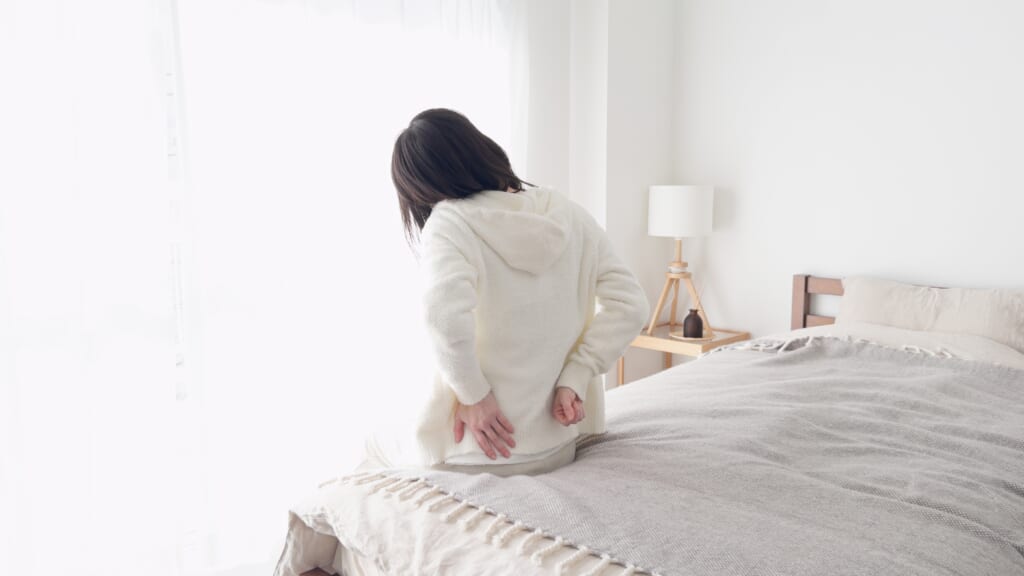
Some people may be suffering from symptoms such as sharp, electric-like pain and numbness that runs from the buttocks to the toes. While many have heard of the term sciatica, many people are surprised to learn that it is not a medical condition. Sciatica pain is a sign from your body calling for help
In this article, we will explain in detail how to identify the underlying disease that is causing the pain, stretches you can do at home, and treatments to eliminate the pain at its root
table of contents
What is sciatica? What causes it?
What is sciatica
The sciatic nerve is the thickest and longest peripheral nerve in the body, about as thick as a finger. It emerges from the lower spine on both sides of the body, passes through the buttocks (behind the hip joint), continues down the back of the thigh, down the calf, and down to the toes. When pressure or damage occurs anywhere along the long sciatic nerve, pain and numbness occur. This is sciatica. In other words, sciatica is not the name of a disease, but rather the name of a symptom, just like headaches or abdominal pain
Source: Japanese Orthopaedic Association | Orthopaedic Series "Sciatica"
Source: Japanese Clinical Orthopaedic Association | Sciatica
Source: Japanese Society of Pain Clinicians | Treatment Guidelines 5th Edition "Diseases and Pain in the Lower Limbs"
Diseases that can cause sciatica
There are many diseases that can cause sciatica, but the majority of cases occur in the lumbar spine. We will explain the diseases that cause it, divided into the parts of the nerve that are affected
lumbar region
The following diseases can cause problems around the lower back (lumbar vertebrae):
- Lumbar disc herniation: The outer layer of the cushion called the intervertebral disc between the lumbar vertebrae becomes torn, causing the nucleus pulposus inside to protrude and compress the nerve roots
- Spondylolisthesis: The bones at the back of the spine separate due to intense sports during youth, and the resulting bones and tissues compress the nerves
- Lumbar spinal stenosis: As we age, bones and ligaments thicken, narrowing the nerve passage (spinal canal), and compressing the nerve roots and cauda equina
It is often caused by bone deformation due to aging and the accumulated effects of past strenuous exercise, and is a typical cause of sciatica in middle-aged and elderly people
Sciatic nerve area
This is a pattern where there is a problem with the nerve pathways around the buttocks and thighs after exiting the lumbar vertebrae (spine)
- Piriformis syndrome: The piriformis muscle in the buttocks becomes stiff and compresses the sciatic nerve that runs underneath
- Shingles: A virus attacks the sciatic nerve, causing severe pain followed by a rash
If no abnormalities are found in the lumbar bones themselves, this is the area to suspect
No nerve damage
Pain can occur even when there is no abnormality in the nerve itself. Similar pain can occur as referred pain from conditions such as osteoarthritis of the hip, diabetic neuropathy, or in some cases the cause cannot be identified
Source: Japanese Orthopaedic Association | Orthopaedic Series "Sciatica"
Symptoms that require immediate medical attention and why they cannot be ignored
It is important not to dismiss sciatica as "just a pain" and leave it untreated. In some cases, nerve damage can progress rapidly, and if treatment is not given quickly enough, you may be left with permanent paralysis
Symptoms that require immediate medical attention
In addition to pain, do you experience any of the following symptoms?
- Symptoms of muscle weakness: Symptoms such as "slippers coming off easily" and "stumbling over nothing" may be a sign of "foot drop," a condition in which the strength to lift the ankles and toes is weakened
- Suspected bladder-rectum disorder (cauda equina syndrome): Symptoms such as a decreased sensation when wiping the bottom and difficulty urinating or leaking urine are serious conditions that may require emergency surgery
- Severe sensory impairment: "No sensation when touched" and "Cannot sense skin temperature"
If you experience signs of muscle weakness or numbness, do not hesitate to seek medical attention
Why we can't leave it alone
Once nerve cells have completely died, it is difficult to restore them to their original state even with modern medical technology (irreversible changes). If you leave it alone, thinking "it's just pain, so I can just bear it," the pressure on the nerves will progress, and you run the risk of being left with permanent paralysis. It is important to get a diagnosis from a specialist before it is too late
Stretches and lifestyle habits to relieve pain
Here we will explain stretches and lifestyle habits that you can do at home to relieve pain
Stretching (at the office or at home)
Relaxing the muscles in your buttocks (piriformis) may relieve pressure on the nerve
[Stretches you can do while sitting in a chair]
- Sit shallowly in a chair and place the ankle of the painful side on the knee of the other side (making a "figure four" with your feet)
- Keeping your spine straight, slowly lean your upper body forward
- Hold the position for 20 to 30 seconds until you feel a pleasant pain deep in your buttocks
The key is to keep breathing and relax
On the other hand, there are also stretches you can do while lying down
[Stretching while lying down]
- Lie on your back and bend both knees
- Place one ankle on the other knee
- Grab the thigh of your bottom leg with both hands and pull it towards your chest
Keep this position, feeling the muscles in your buttocks stretch
Should I cool it down or heat it up? | Difference between acute and chronic
Whether you should apply heat or cold depends on whether the pain is severe during the acute phase or the chronic phase once the pain has subsided
During the acute phase (immediately after the onset of pain to a few days), apply ice. If there is severe pain and the affected area is hot, inflammation is occurring. If you warm the area too much during this period, for example by taking a bath, the inflammation may spread and the pain may worsen. The correct solution is to cool the area with an ice pack or cold compress to reduce inflammation
Apply heat during the chronic stage (when the pain has subsided or is prolonged). When the peak of the intense pain has passed and a dull ache or feeling of heaviness continues, one of the causes of the pain is poor blood flow. Warming the affected area with a bath, a heating pad, or a warm compress will promote blood circulation, which will relieve muscle tension and relieve pain
How to Treat Sciatica | Treating the Root Cause of the Pain
One option is to wait for natural healing through conservative treatment, but if there is no improvement over a long period of time, you should consider taking a direct approach to the underlying disease (such as a herniated disc or spinal stenosis) rather than using painkillers
Symptomatic treatment (painkillers)
Commonly prescribed painkillers and block injections are symptomatic treatments that block pain transmission and temporarily suppress inflammation, but do not remove the underlying cause
Fundamental treatment utilizing tissue repair ability | Regenerative medicine
In recent years, regenerative medicine (private medical treatment) has been gaining attention as an alternative to surgery. In regenerative medicine, stem cells and components extracted from one's own fat or blood are directly administered to the affected area, i.e., the damaged intervertebral disc or area around the nerve. The cytokines (growth factors) released by the stem cells are expected to calm chronic nerve inflammation and promote the repair of damaged tissue. This treatment method is chosen by busy people as it does not require hospitalization and puts little strain on the body
summary
Although sciatica is generally referred to as such, there are many different causes, making a correct differential diagnosis essential. When people hear that surgery is required for fundamental treatment, many hesitate, fearing that they cannot take time off work, are afraid of surgery, or are worried about recurrence. However, a new option called regenerative medicine has recently emerged. If you are temporarily managing your pain with massage or chiropractic treatment, why not consider visiting a medical institution to identify the cause and consider fundamental treatment with an eye to the future?
HELENE Clinic Instagram is here
Supervisor: Yuzo Terakawa (neurosurgeon)