
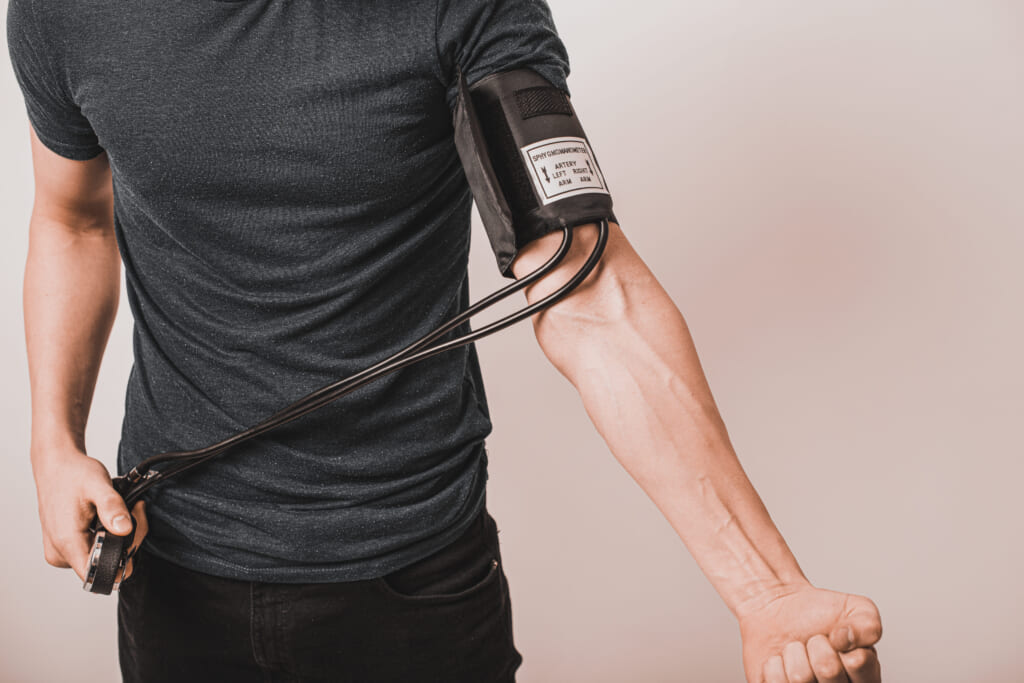
For those who don't have the time, energy, or money to go to the gym, we have good news for you. Training for blood pressure care doesn't have to aim for bodybuilder-like muscles. What's important is not to gain muscle mass, but to "not lose it." Simply maintaining muscle mass can have a significant effect on stabilizing blood pressure
In this article, we will introduce some easy ways to maintain your muscles in between your commute or desk work
table of contents
Why maintaining muscle mass can stabilize blood pressure
Why does maintaining muscle mass affect blood pressure?
A 2010 study of Japanese people found that both men and women experience a decrease in muscle mass throughout the body as they age. As muscle mass decreases, basal metabolism and body temperature decrease, but the body tries to maintain the temperature of important organs such as the brain and heart by constricting blood vessels on the surface of the skin to prevent heat from escaping. This constriction of blood vessels ultimately leads to an increase in blood pressure
Additionally, a recent European study reported that skeletal muscle mass is inversely correlated with high blood pressure, particularly in women, suggesting that maintaining muscle mass in some way can help stabilize blood pressure
Reference: J-stage | Characteristics of muscle mass in Japanese people with aging
Maintaining muscle while commuting or working at a desk
When we think of exercise, we often think of sports, but energy expenditure can be divided into two categories: "exercise activity thermogenesis (EAT)" and "non-exercise activity thermogenesis (NEAT)." NEAT accounts for more than 90% of energy expenditure from physical activity
In other words, even if you don't go to the gym, simply making small changes to the way you sit and walk can be effective enough to maintain your muscles
Reference: J-stage | NEAT and Obesity and Diabetes
Reference: Method 1. Stimulating the soleus muscle under the desk
Reference: Saitama Physical Therapy | Basic knowledge of muscles for physical therapy
Method 2: "Draw in" while waiting for the elevator
Learn the breathing technique called drawing in and try it while waiting in an elevator or at a traffic light
To do the draw-in, first straighten your back, relax your shoulders, and inhale through your nose, expanding your stomach. Next, purse your lips and slowly exhale, sucking your stomach in towards your spine. The key is to exhale completely, imagining your belly button touching your spine, and continue breathing while maintaining this sucked-in position. This exercise doesn't cause a sudden rise in blood pressure like strenuous muscle training, and it trains the transverse abdominis, a natural corset deep within the body, helping to prevent back pain and maintain good posture
Reference: Japan Blood Products Organization | Training 19 Strengthen your core 1 - Draw-in practice -
Method 3. The stairs are a "free gym"
If you come across stairs at a station or office, it's your chance. According to the exercise intensity (METs) guidelines published by the Japan Sports Agency, normal walking is 3.0 METs, while climbing stairs is 4.0 METs even if done slowly, and 8.8 METs if done quickly
You don't have to go to the trouble of getting changed and doing strenuous exercise; just switching from escalators to stairs will definitely increase the intensity of your workout. Turn your daily commute into training time and use it as a free gym
Protecting Muscle Through Diet | What to Eat and When
Just as important as exercise is diet. To protect your muscles, it's important to be strategic about not only what you eat, but also when you eat
Protein and leucine
As we age, our muscle-building response slows (anabolic resistance). For this reason, people in their 40s and older need to actively consume higher-quality essential amino acids than younger people. Leucine, an essential amino acid, is particularly important. Research has shown that a low leucine content (26%) prevents muscle synthesis in older people, but a high leucine content (41%) allows older people to build muscle at the same rate as younger people. Be sure to choose foods known to be rich in leucine, such as lean tuna, chicken breast, eggs, and dairy products
Reference: J-stage | Preventing Sarcopenia: The Effects of Diet and Exercise
Eat at breakfast
If you only have coffee in the morning, be careful. A 2021 study reported that consuming protein at breakfast is effective in increasing muscle mass. While you sleep, your body is in a fasting state, causing a decrease in amino acid levels. Even if you eat a lot at dinner, your body will be depleted by the next morning
If you don't replenish your protein (from eggs, natto, etc.) in the morning, your body will break down your own muscles to create energy, so you need protein in the morning to prevent muscle loss
Reference: Waseda University | Topic: "Relationship between protein intake time and muscle mass gain"
summary
"Climbing the stairs once a day" or "adding an egg to your breakfast" are small changes, but if you continue them for a year, they will become a big muscle asset that will protect your health in the future. No special training is required. Just try adding a little muscle care to your current lifestyle
If you are unable to move due to joint pain or are experiencing muscle weakness, there is an option to revitalize your muscles from the cellular level using the power of regenerative medicine, so why not give it a try?