Proteo® Super early detection of cancer
PROTEO
With early detection, the 5-year survival rate is over 95%!
Did you know? We're now in an era where most cancers detected early can be cured.
While it's generally said that a cancer is "cured" if there's no recurrence for five years after treatment, looking at data published by the National Cancer Center Council*1,
<For those who have had cancer detected and undergone surgery at Stage I>
The 5-year relative survival rate is reported to be 95.4% for all types of cancer, and 100% for stomach cancer, rectal cancer, breast cancer, etc.
However, if detection is delayed and the cancer progresses to stage IV, the 5-year relative survival rate drops significantly, becoming as low as 16.9% for stomach cancer, for example. The
most important thing in cancer treatment is to detect cancer as early as possible. This
applies to solid cancers such as lung cancer, breast cancer, stomach cancer, liver cancer, colorectal cancer, tongue cancer, thyroid cancer, kidney cancer, prostate cancer, uterine cancer, and ovarian cancer.
*1 [Citation] (Joint survey of survival rates)
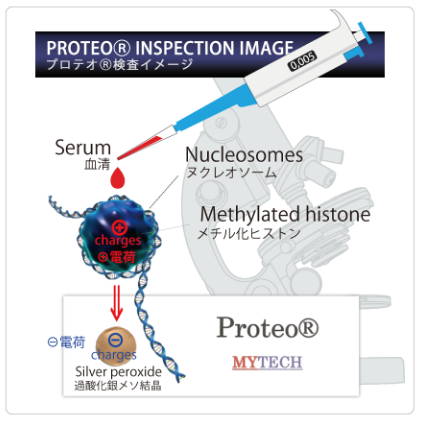
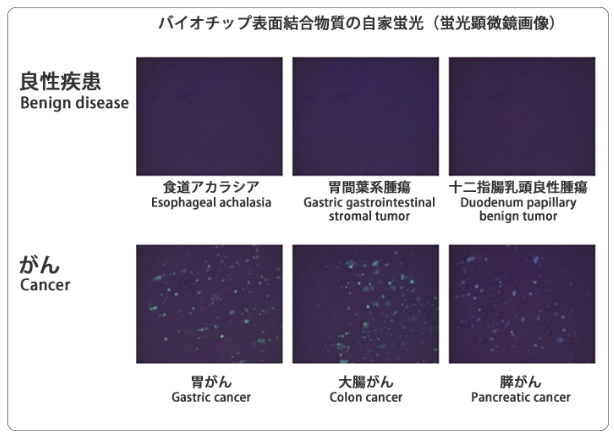
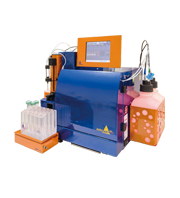
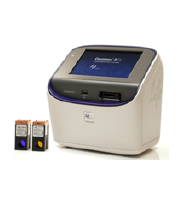
When cancer develops in the body, cancer-related substances are released into the blood. Cancer-related substances in the blood adsorbed to the test chip are measured using a fluorescence microscope, and the risk of cancer is determined in three stages, A, B, and C.
The test requires only a very small amount of blood, 30 microliters, and is unaffected by factors such as food intake.
Furthermore, a key feature of this test is that the measured values show a clear difference. In addition to early detection of cancer, this test is also useful for assessing the risk of progression, recurrence and metastasis, and the risk of treatment effectiveness.
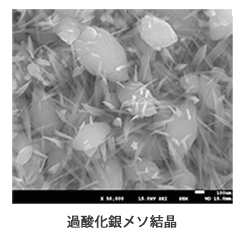
Cancer-related substances: Protein complexes containing DNA (presumed nucleosomes) react with and are adsorbed by silver peroxide mesocrystals, a new substance formed on the ProteoⓇ chip. By looking at this with a fluorescence microscope, it is possible to detect even very early stage cancers, making it possible to identify and examine multiple cancers in a single examination.
It is very difficult to distinguish between benign and malignant tumors, and highly sensitive and highly specific testing methods are required.
Crystals of free cancer-related substances in the blood are derived from cells involved in apoptosis, and therefore are present in small amounts in benign diseases (people without cancer) and benign tumors, but are specifically present in large amounts in cancer.
Fluorescence is observed more frequently in malignant tumors compared to benign diseases and tumors.
Inspection amount
Sample collection fee + examination fee: 200,000 yen (tax included)
*This treatment is not covered by insurance.
Inspection flow
1. A small amount of blood is collected from a fingertip or other area.
2. The sample is sent to a specialized testing facility for analysis. The results of the Proteo® test are quantified, a risk assessment is performed, and a test result report is sent to the doctor.
3. Based on the test result report, the doctor will explain the results. Depending on the results, additional tests may be recommended, or future treatment options may be suggested.
Q&A
Do I need to refrain from eating or drinking before blood collection?
Tests with ProteoⓇ are not affected by food or drink, so there is no need for dietary restrictions. However, please refrain from excessive alcohol intake.
Can I use health insurance?
Health insurance is not applicable because it is treated as a free medical treatment.