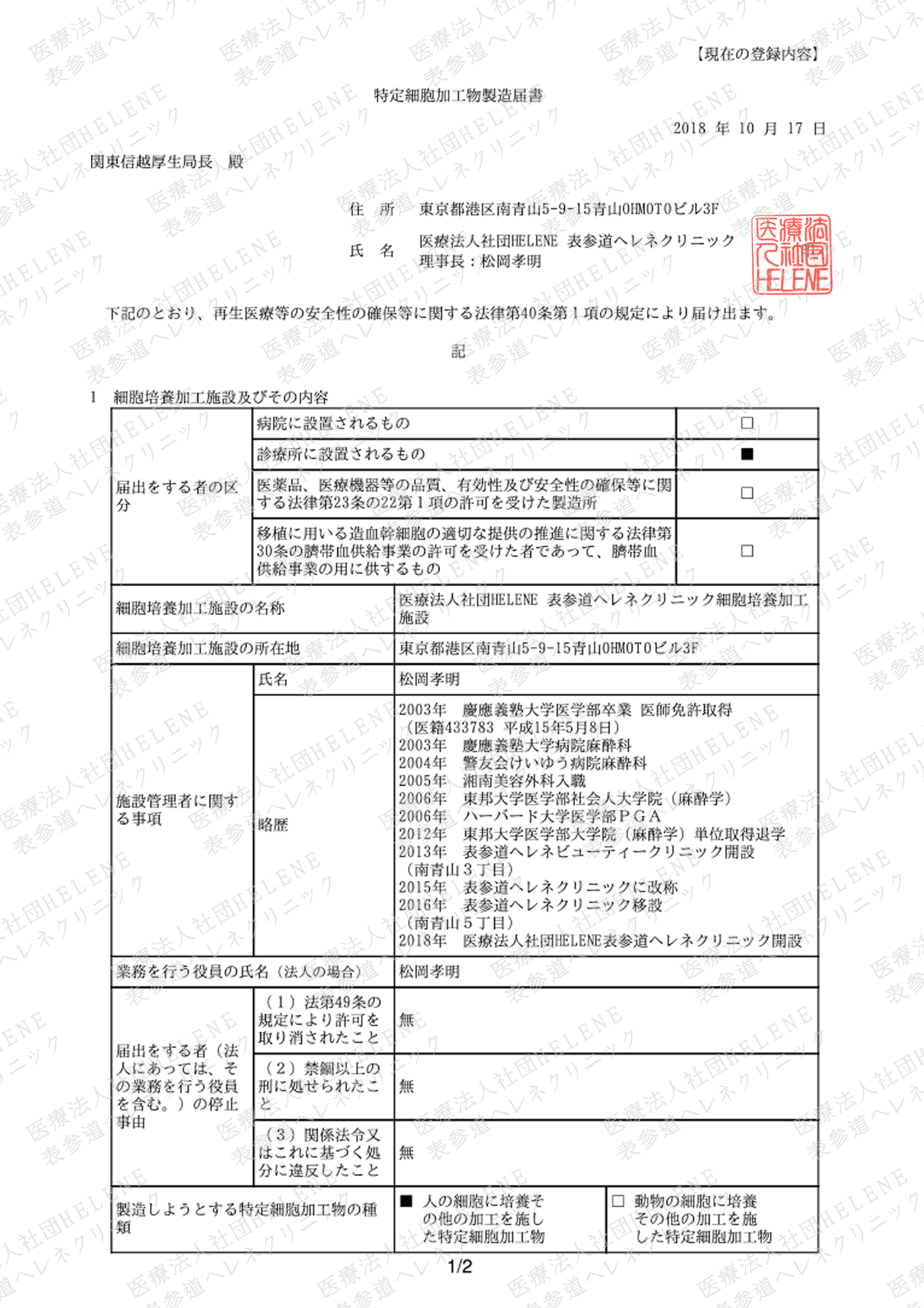
Umbilical cord stem cell-derived exosome liquid "Prosentan"
(1) Treatment details: Stem cell-derived exosomes are administered to patients by methods such as inhalation, topical application, subcutaneous injection, intravenous injection, and intramuscular injection, with various effects expected. (2) Prescriptionable drugs and fees: Stem cell conditioned medium (fee: 280,000 yen per box of 10 vials) (3) Main side effects and risks: Mild symptoms such as itching, rash, low-grade fever, and allergic reactions may rarely occur. (4) Disclosure of unapproved drug status: This drug is not approved in Japan and is prescribed on a self-pay basis. * Please note that unapproved drugs are not covered by public relief systems (Pharmaceutical Adverse Reaction Damage Relief System, Biological Product Infection Damage Relief System). (5) Disclosure of procurement route, etc.: This drug is prepared in-house. (6) Availability of domestically approved drugs with the same ingredients and efficacy: None (7) Disclosure of safety information in other countries: Safety is in line with that of exosome therapy. No major adverse events have been reported.
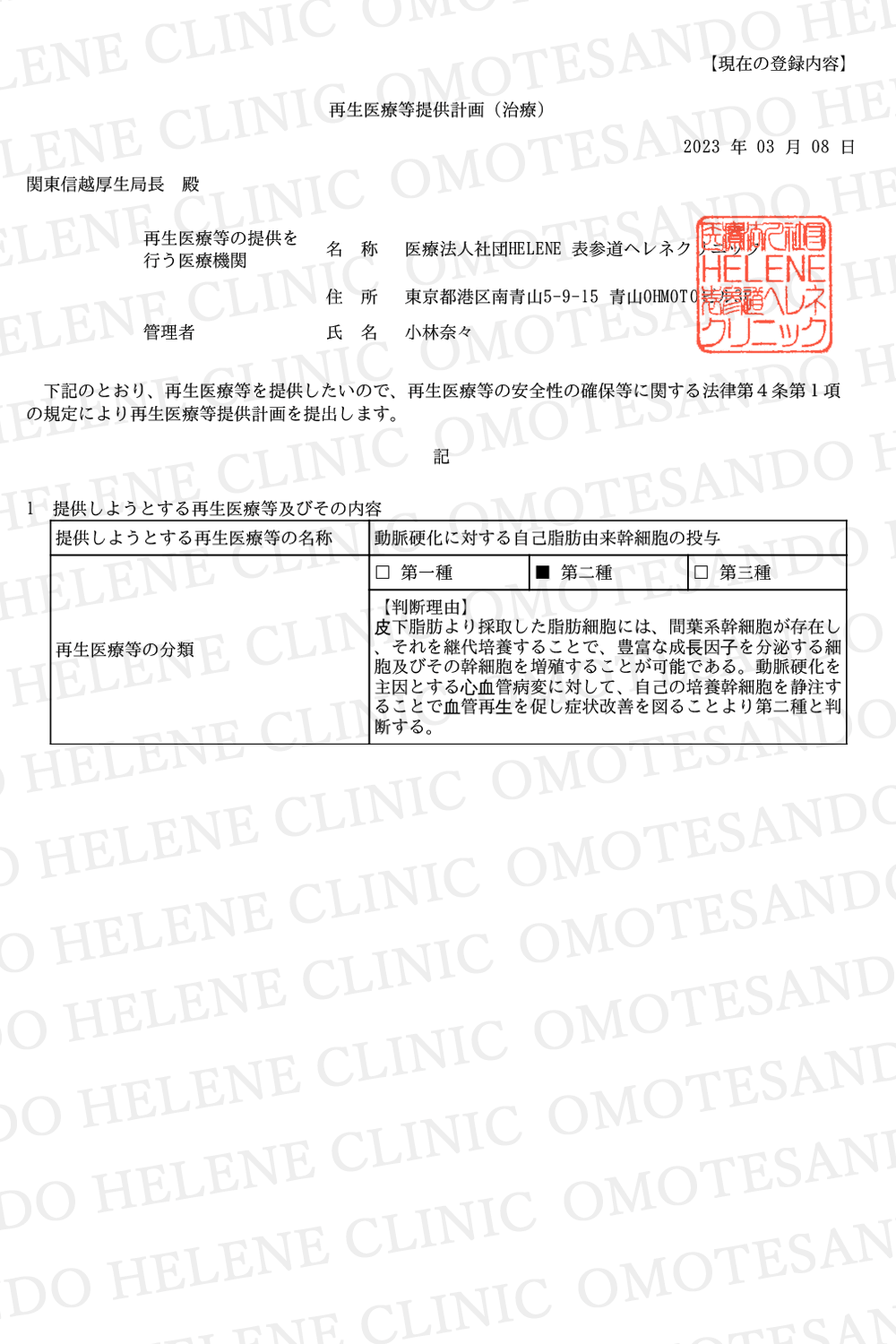
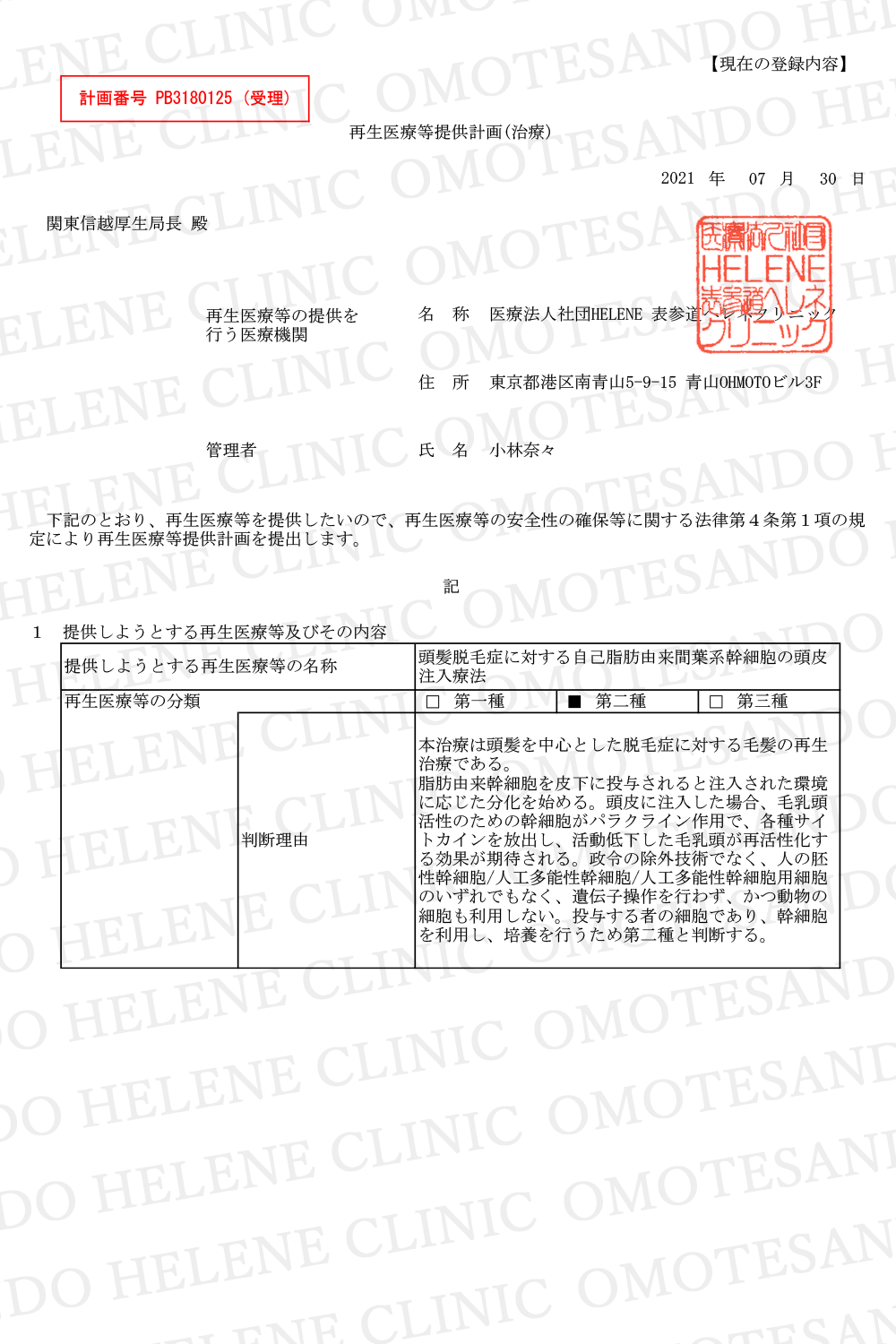
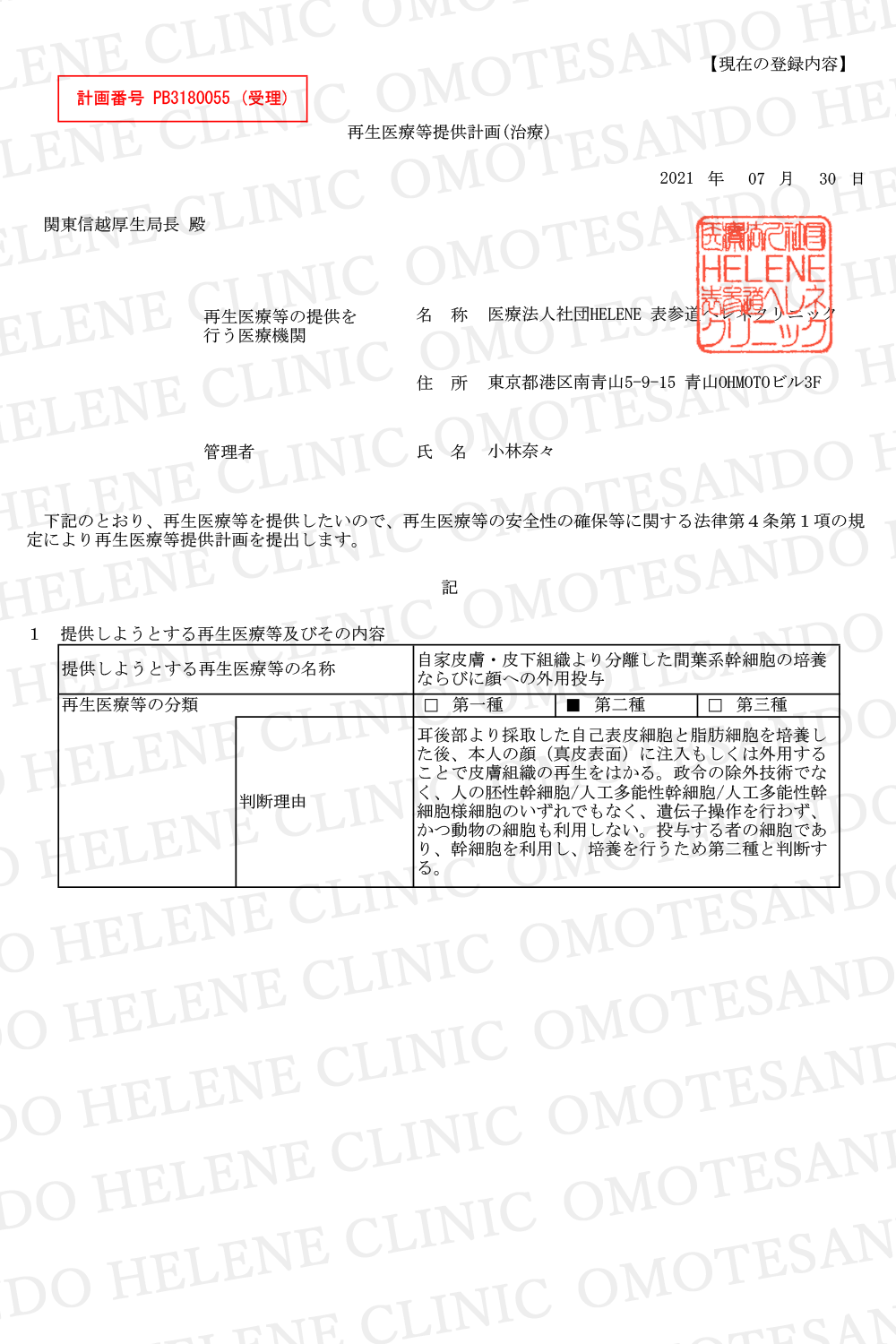
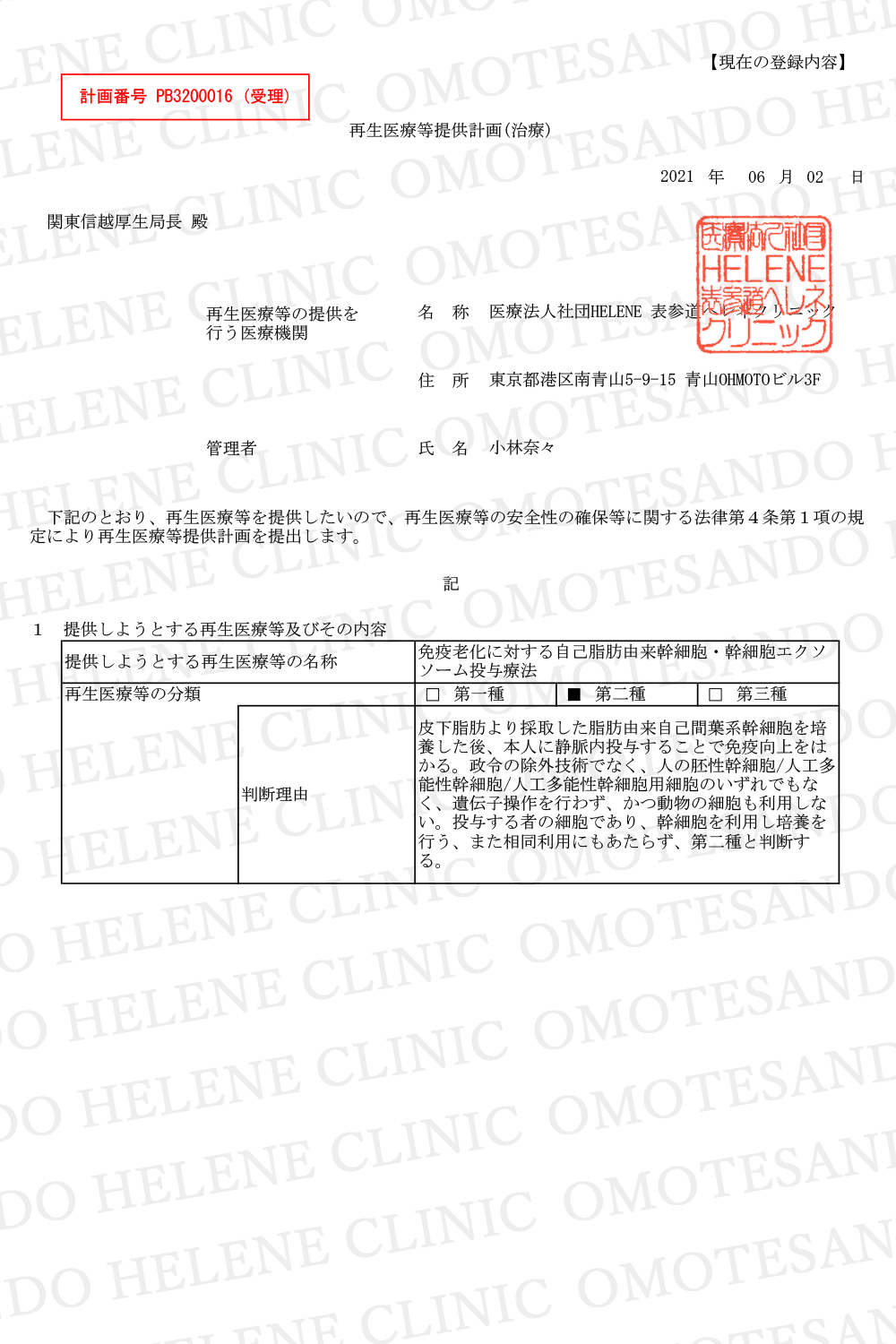
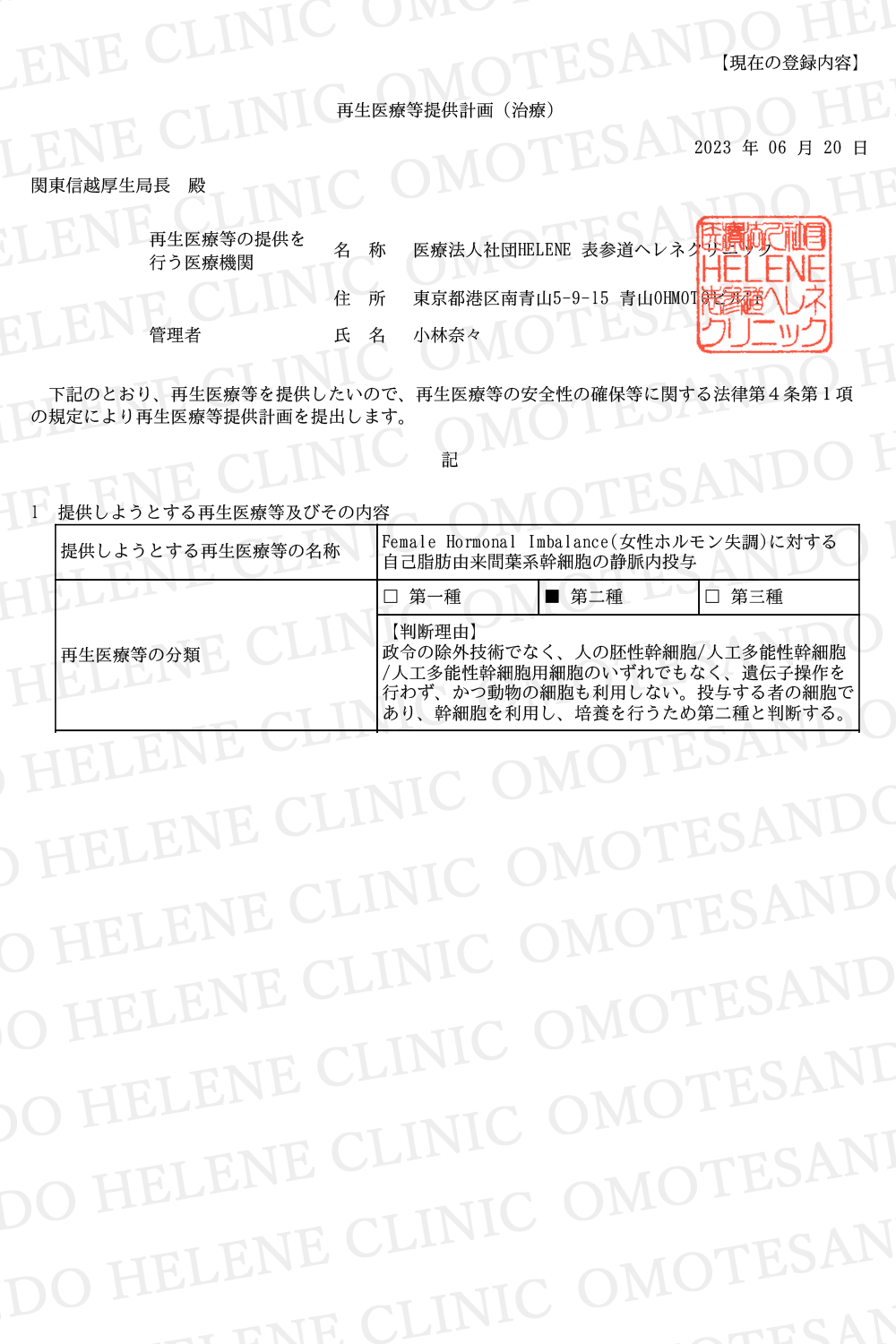
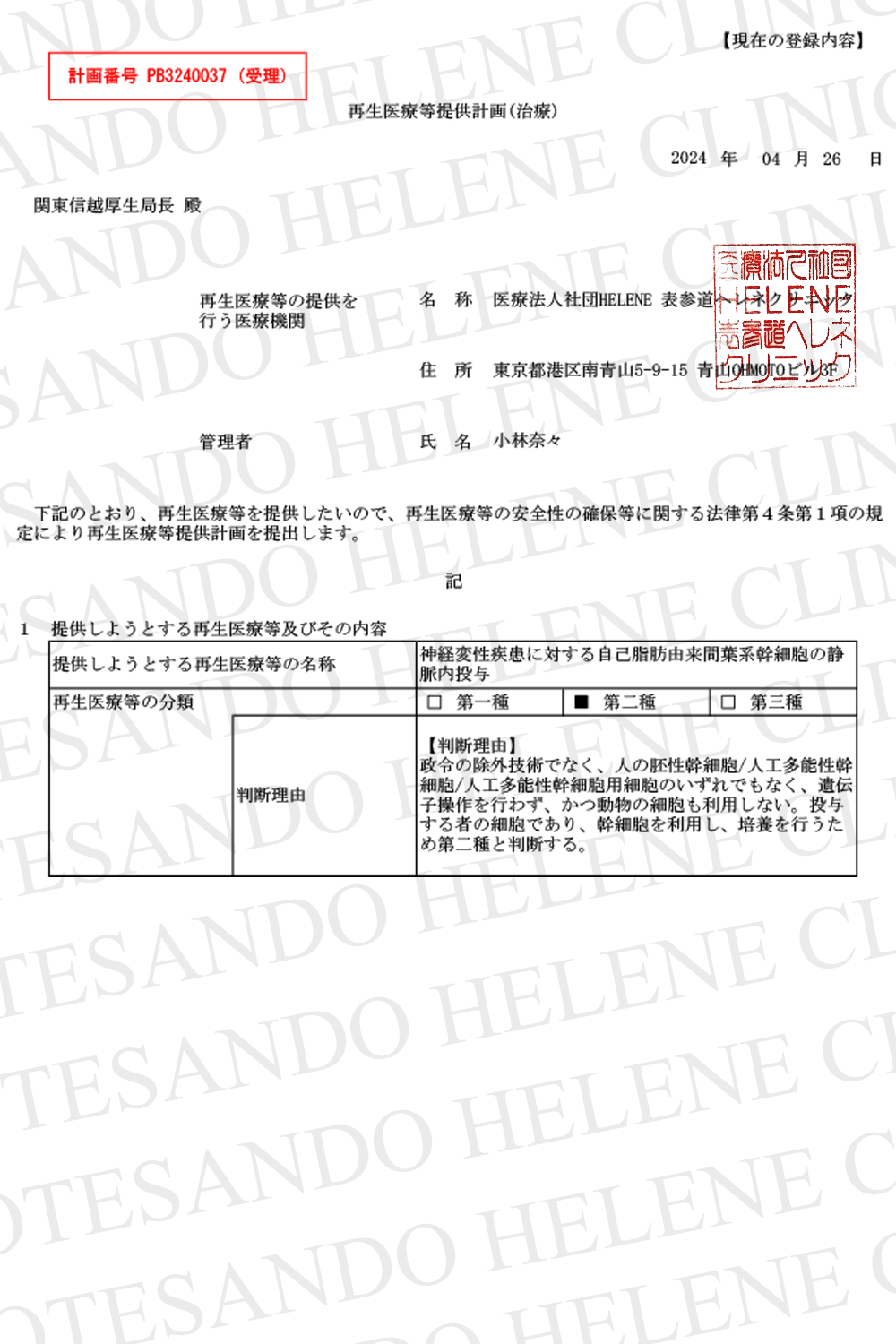
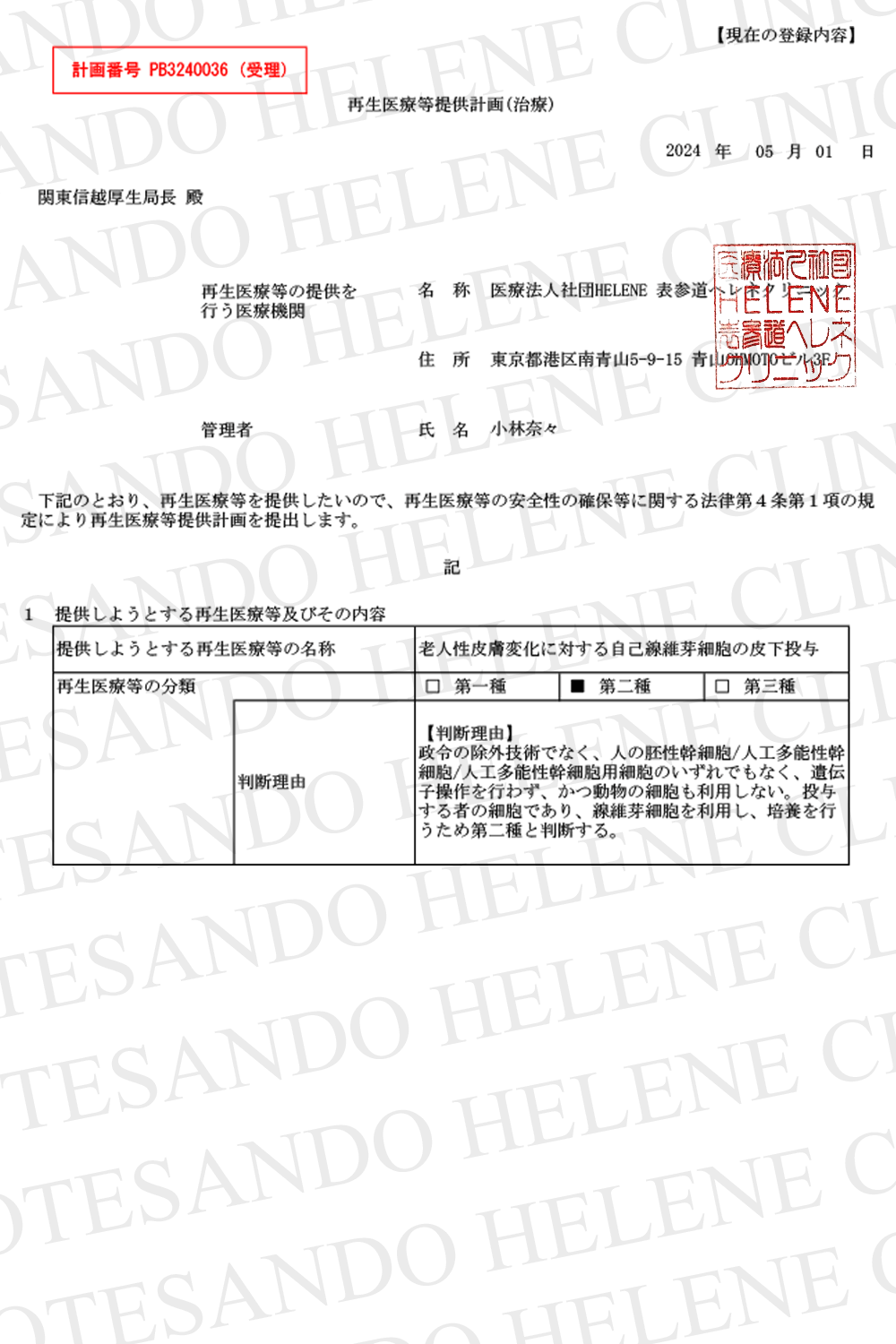
Stem cell administration treatment (intravenous administration/subcutaneous)
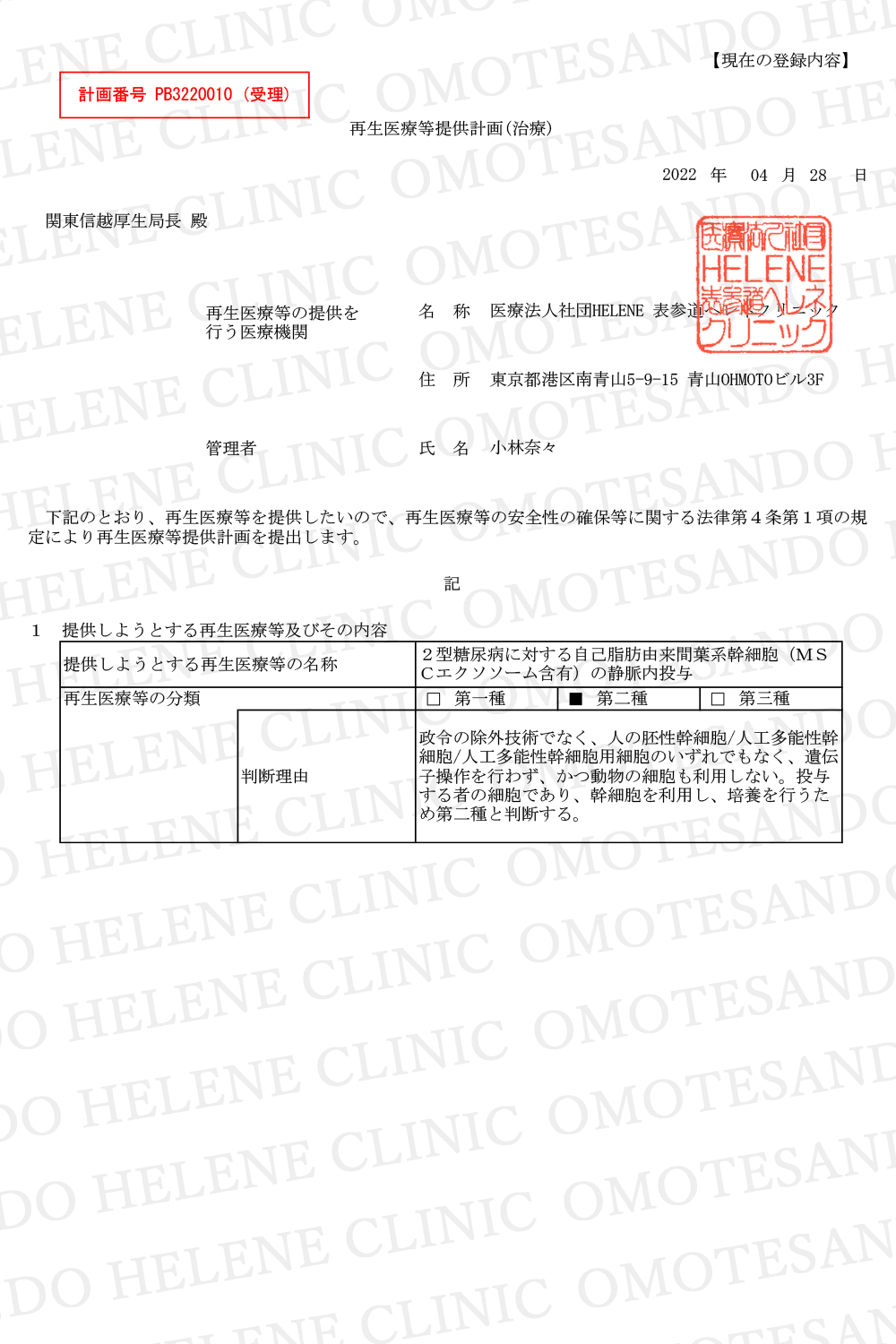
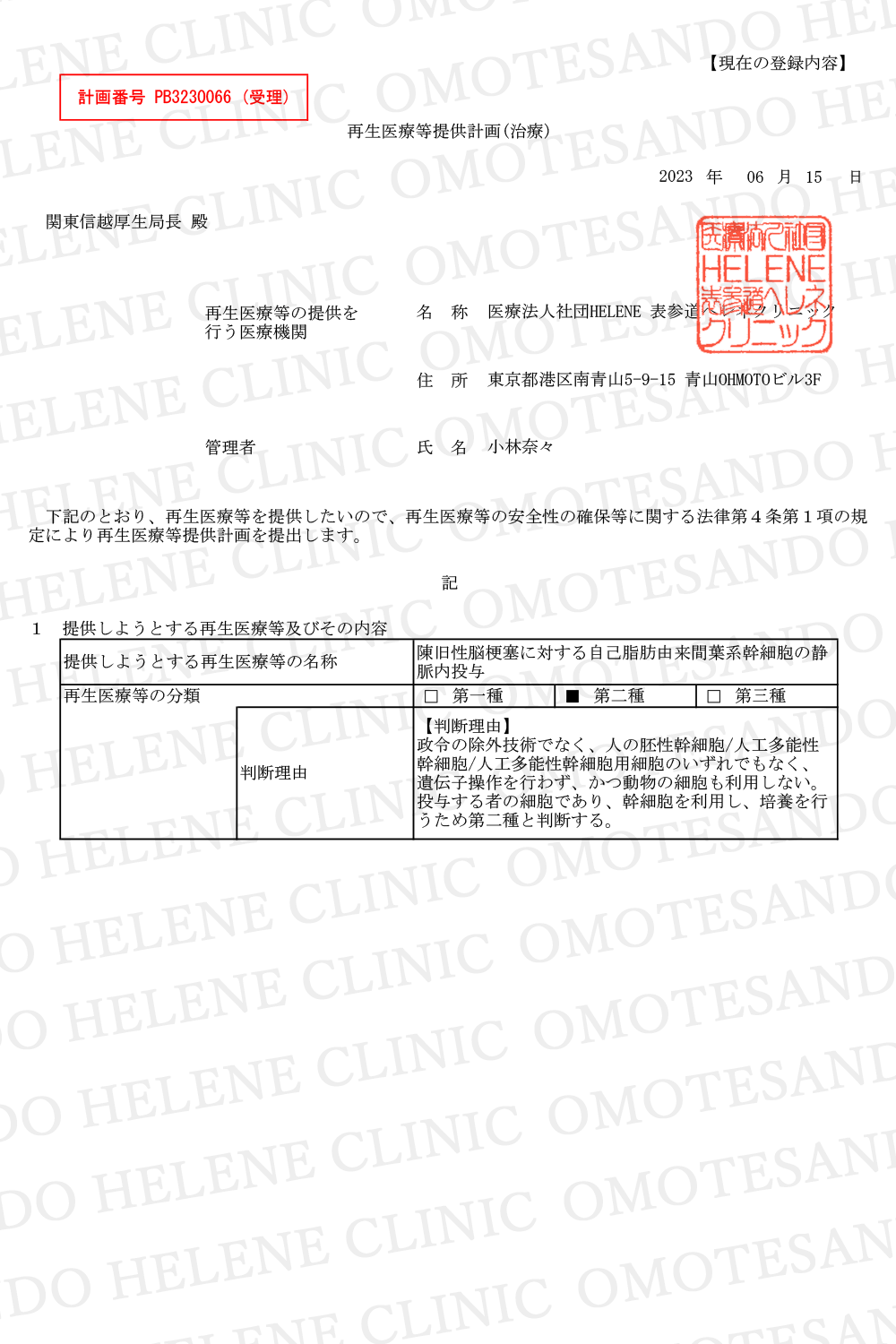
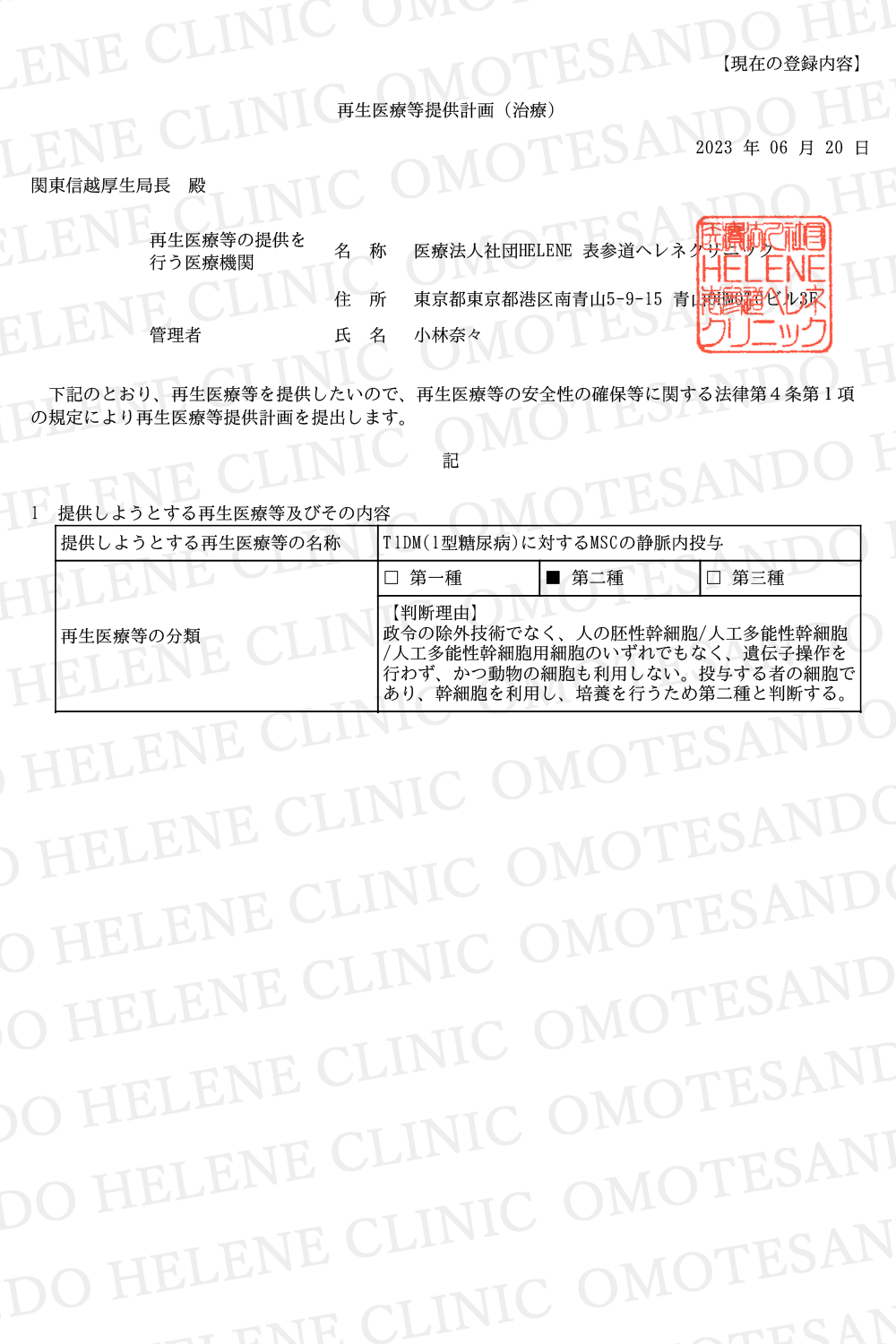
(1) Treatment details: Autologous stem cells are cultured in the hospital's CPC and administered to the patient via intravenous, subcutaneous, intramuscular, or intra-articular injection, with the expectation of tissue regeneration. (2) Prescriptionable drugs and fees: Stem cells (fees vary depending on the number of cells) (3) Main side effects and risks: Mild symptoms such as itching, rash, low-grade fever, and allergic reactions may rarely occur. (4) Disclosure of unapproved drugs, etc.: This treatment uses drugs that are not approved in Japan and is prescribed on a self-pay basis. * Please note that unapproved drugs are not covered by public relief systems (Pharmaceutical Adverse Reaction Damage Relief System, Biological Product Infection Damage Relief System). (5) Disclosure of supply route, etc.: This drug is manufactured in the hospital's CPC. (6) Availability of domestically approved drugs with the same ingredients and efficacy: None (7) Disclosure of safety information in other countries: Safety is in line with that of stem cell therapy. No major adverse events have been reported.
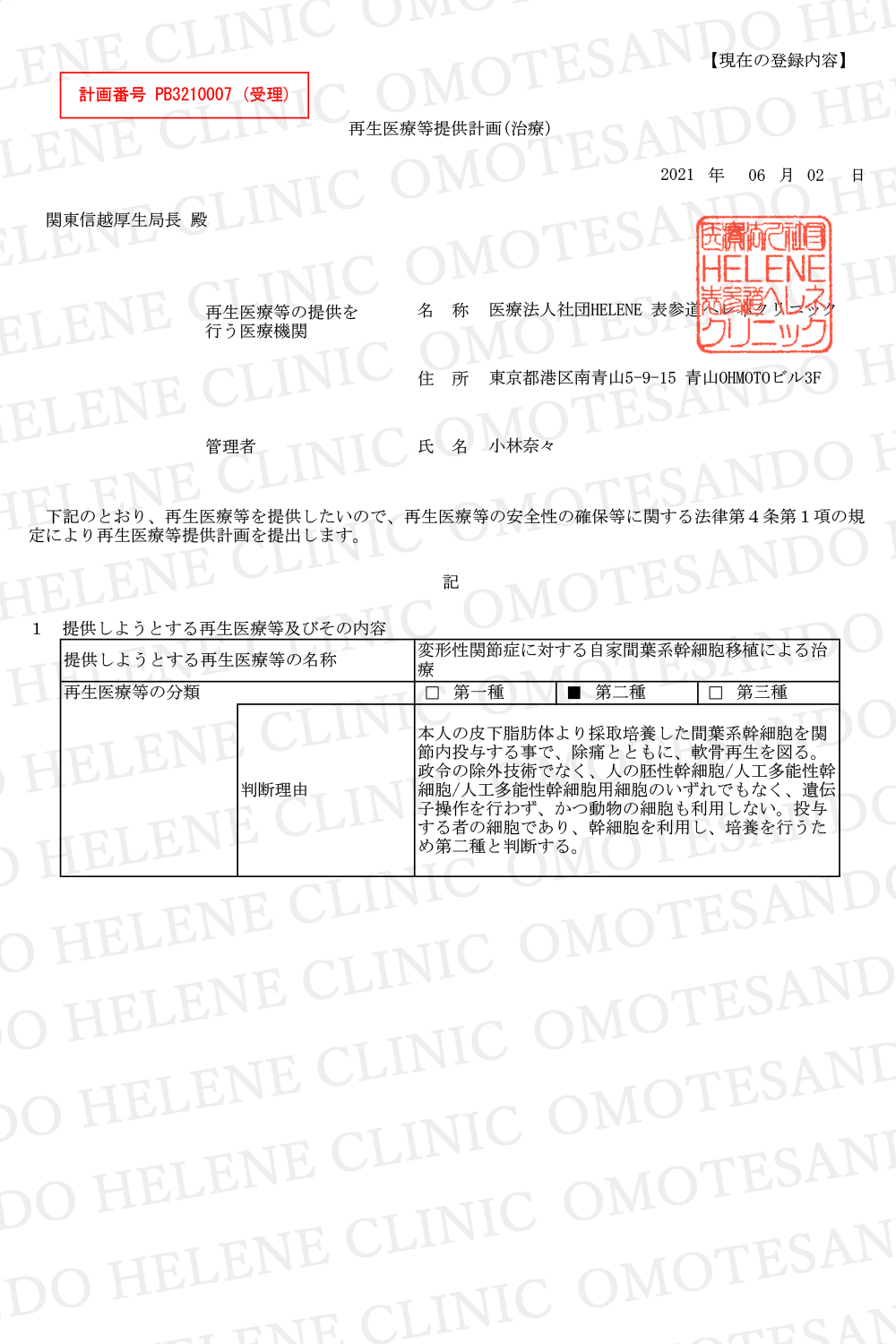
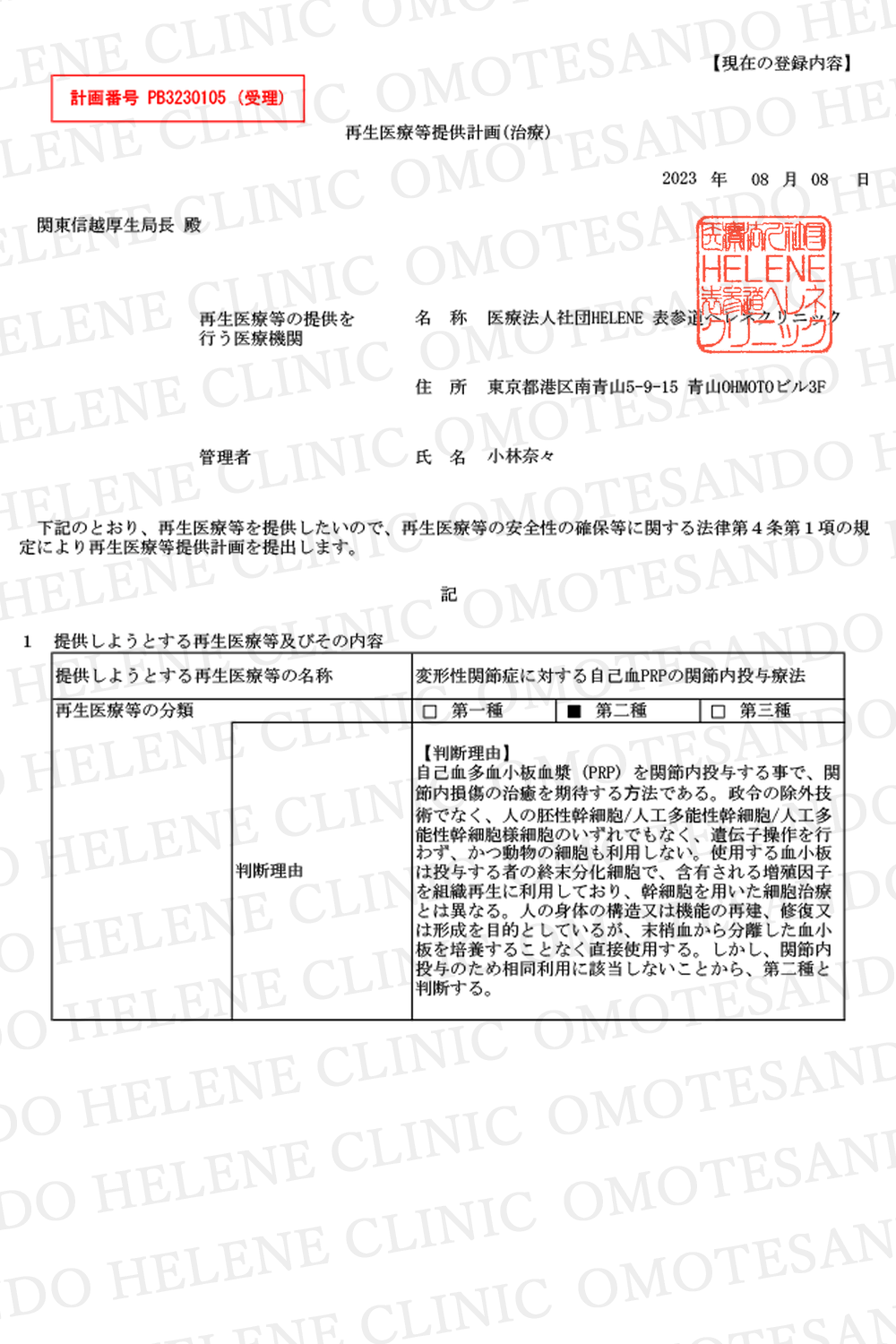
Stem cell administration treatment (intra-articular)
(1) Treatment details: Autologous stem cells are cultured in the hospital's CPC and administered to the patient by methods such as intra-articular administration, with the expectation of tissue regeneration within the joint. (2) Prescriptionable drugs and fees: Stem cells (fees vary depending on the number of cells). (3) Main side effects and risks: Mild symptoms such as itching, rash, low-grade fever, and allergic reactions may rarely occur. (4) Disclosure of unapproved drugs, etc.: This treatment is prescribed as a self-pay medical service using drugs that are not approved in Japan. * Please note that public relief systems (Pharmaceutical Adverse Reaction Damage Relief System, Biological Product Infection Damage Relief System) do not apply to unapproved drugs. (5) Disclosure of supply route, etc.: This drug is manufactured in the hospital's CPC. (6) Availability of domestically approved drugs with the same ingredients and efficacy: None. (7) Disclosure of safety information in other countries: Safety is in line with that of stem cell therapy. No major adverse events have been reported.
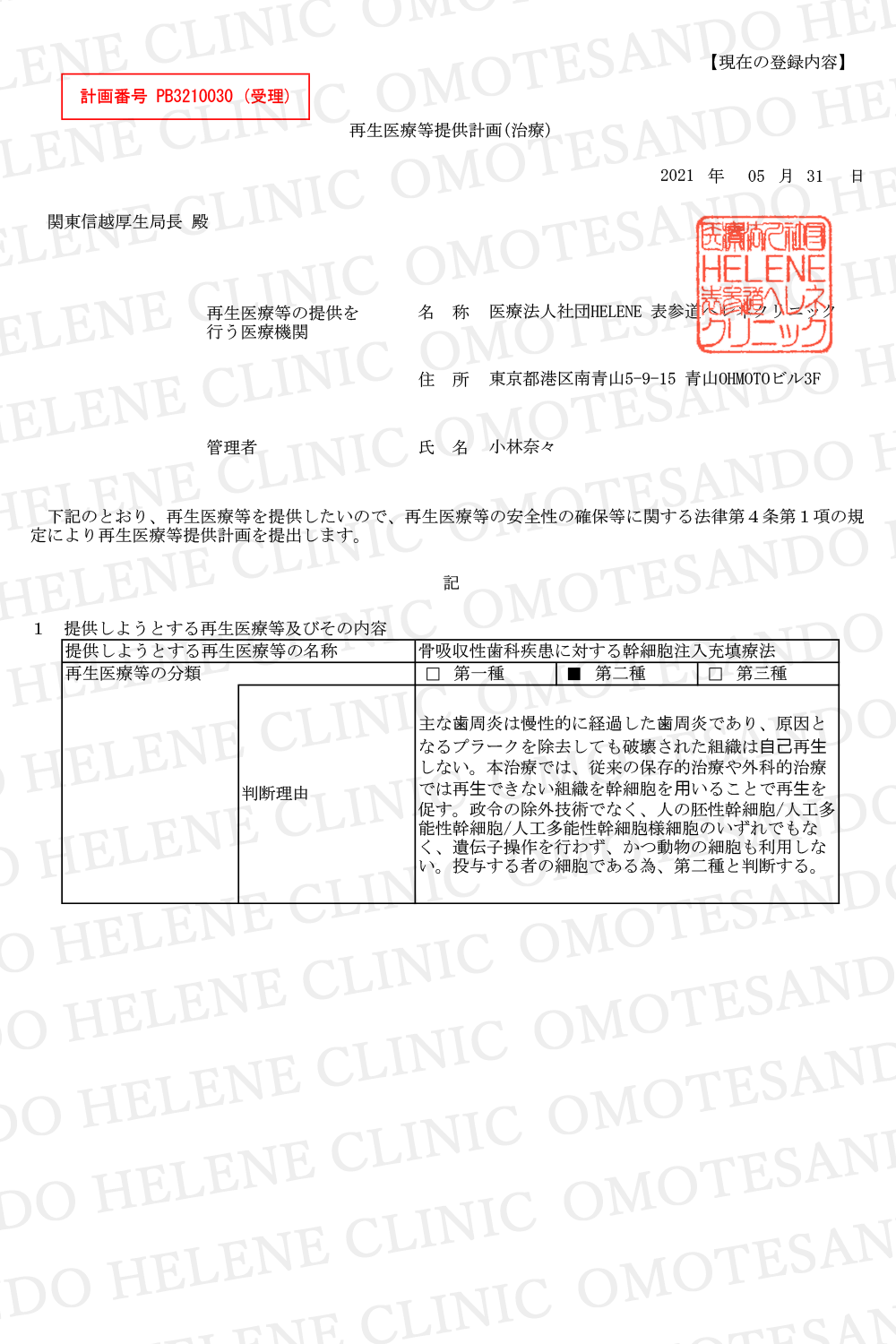
Stem cell administration treatment (periodontal disease)
(1) Treatment details: Autologous stem cells are cultured in the hospital's CPC and administered to the patient by methods such as gingival injection, with the expectation of tissue regeneration in the surrounding tissue. (2) Prescriptionable drugs and fees: Stem cells (fees vary depending on the number of cells) (3) Main side effects and risks: Mild symptoms such as itching, rash, low-grade fever, and allergic reactions may rarely occur. (4) Disclosure of unapproved drugs, etc.: This treatment is prescribed as a self-pay medical service using drugs that are not approved in Japan. * Please note that public relief systems (Pharmaceutical Adverse Reaction Damage Relief System, Biological Product Infection Damage Relief System) do not apply to unapproved drugs. (5) Disclosure of supply route, etc.: This drug is manufactured in the hospital's CPC. (6) Availability of domestically approved drugs with the same ingredients and efficacy: None (7) Disclosure of safety information in other countries: Safety is in line with that of stem cell therapy. No major adverse events have been reported.
About medical advertising guidelines
In response to the medical advertising guidelines that came into effect on June 1, 2018, the HELENE Group has removed testimonials from its website. Furthermore, we have completely revised our website to include explanations of the procedure, its risks, and its price whenever case photos are displayed. We
apologize for any inconvenience this may cause to our patients and customers, and we appreciate your understanding.
Partial excerpt from the original medical advertising guidelines
Part 1 Purpose of Advertising Regulations
Partial revision of the Medical Care Act
As with other advertising media, limiting the items that can be advertised on the websites of medical institutions, etc. may hinder the smooth provision of information requested by patients, such as detailed medical treatment content. Under certain conditions, restrictions on items that can be advertised will be lifted.
Section 3 Prohibited Advertisements
(5) Testimonials regarding the contents or effects of treatments, etc., based on subjective opinions of patients, etc.
Article 1-9, Item 1 of the Ministerial Ordinance stipulates that "not to advertise patient's or other person's subjective experiences or testimonials based on hearsay." Refers to subjective testimonials based on one's own experiences or hearsay from family members, etc., for the purpose of attracting patients to the medical institution concerned. The impression will naturally differ depending on the person, and it is not acceptable as an advertisement related to medical care, given that there is a risk of misleading.
(6) Photographs, etc. before or after treatment, etc. that may mislead the patient, etc. as to the content or effect of the treatment, etc.
Article 1-9, Item 2 of the Ministerial Ordinance stipulates that “not to advertise before or after treatment, etc. that may mislead patients, etc. about the content or effect of treatment, etc.” This refers to so-called before-after photographs, etc. However, given that the results of treatment, etc., naturally differ depending on the conditions of individual patients, photographs, etc. that may mislead patients are not permitted as medical advertisements. be something that cannot be
Furthermore, this does not apply if the pre- or post-operative photographs are accompanied by detailed explanations of the treatment content, costs, and other matters that are normally required, as well as the main risks and side effects of the treatment. In addition,
sufficient consideration should be given to the placement of such information so that it is easy for patients to understand, and formats such as placing it on a linked page or using extremely small font compared to information about benefits and advantages should not be adopted.